


As agricultural engineers, we are committed to ensuring that every drop of water is used as efficiently as possible in agriculture. Drip irrigation is a technique that more than rises to this challenge.
Innovation in Agriculture: Drip Irrigation
Drip irrigation represents a significant innovation in the field of agricultural engineering. It is a system that maximises the efficiency of water and nutrients, providing a direct and controlled supply to the root zone of plants. This method has revolutionised the way crops are grown in arid and semi-arid regions.
Basic Principles of Drip Irrigation
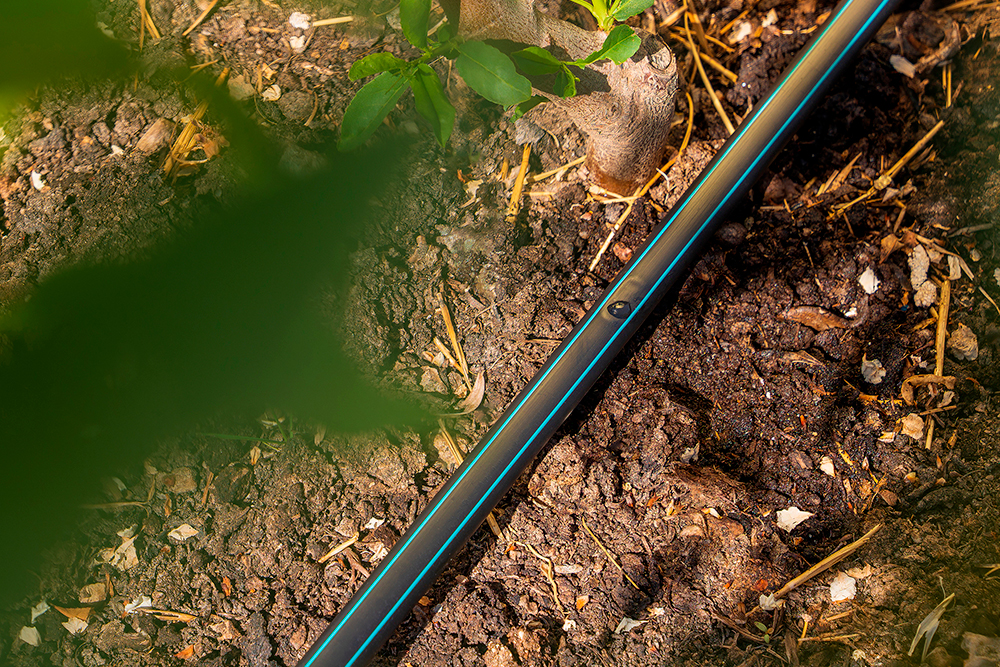
Installing a drip irrigation system begins with understanding its basic principles. Water is delivered drop by drop, directly into the soil, close to the roots. This minimises evaporation and run-off, two of the main problems associated with traditional irrigation.
Key Components of a Drip Irrigation System
Every component of a drip irrigation system plays a vital role:
- Emitters or drippers: These regulate the amount of water released into the soil. There is a wide variety of options available, but two types stand out in particular: pressure-compensating and turbulent. Self-compensating drippers are undoubtedly a standout choice in terms of efficiency; they are designed to maintain a constant flow rate even when there are variations in pressure, which is particularly useful on sloping ground or in systems with long irrigation lines. A good example is our Caudal® PC700 AS product, or its ND version.
There are also other key components in the installation, such as filters, pipes and controllers; the latter enable the system to be automated, adjusting the irrigation to the needs of the crop in question.
Advantages of Drip Irrigation
There are numerous advantages to this system:
- Water saving: Consumption is reduced to the absolute minimum.
- Nutrient optimisation: Fertilisers can be applied directly via the system.
- Reduced labour requirements: Automation reduces the need for manual labour.
- Adaptability: It can be installed on a variety of land types and with a variety of crops.
Frequently Asked Questions (FAQs)
- Is drip irrigation suitable for all types of crops? Drip irrigation is versatile and can be adapted to a wide range of crops, particularly high-value crops and vegetables. However, it is important to assess the specific water and nutrient requirements of each crop.
- What maintenance does a drip irrigation system require? Maintenance includes cleaning filters, inspecting pipes and drippers, and periodically calibrating the system to ensure its efficiency.
- How does drip irrigation affect fertiliser use? It enables fertigation, which is the application of fertilisers dissolved in irrigation water, thereby improving the efficiency of fertiliser use and reducing environmental pollution.
In short
The implementation of drip irrigation is a clear example of how agricultural engineering can make a significant contribution to the sustainability of agriculture. Through this system, we, as agricultural engineers, are at the forefront of optimising water resources, ensuring agricultural productivity and protecting the environment.