

Our customers are often faced with this question – a decision that can affect water consumption, crop yield or even the return on investment. In this article, we’ll try to explain the characteristics of both options so that you can make the best decision for your crop.
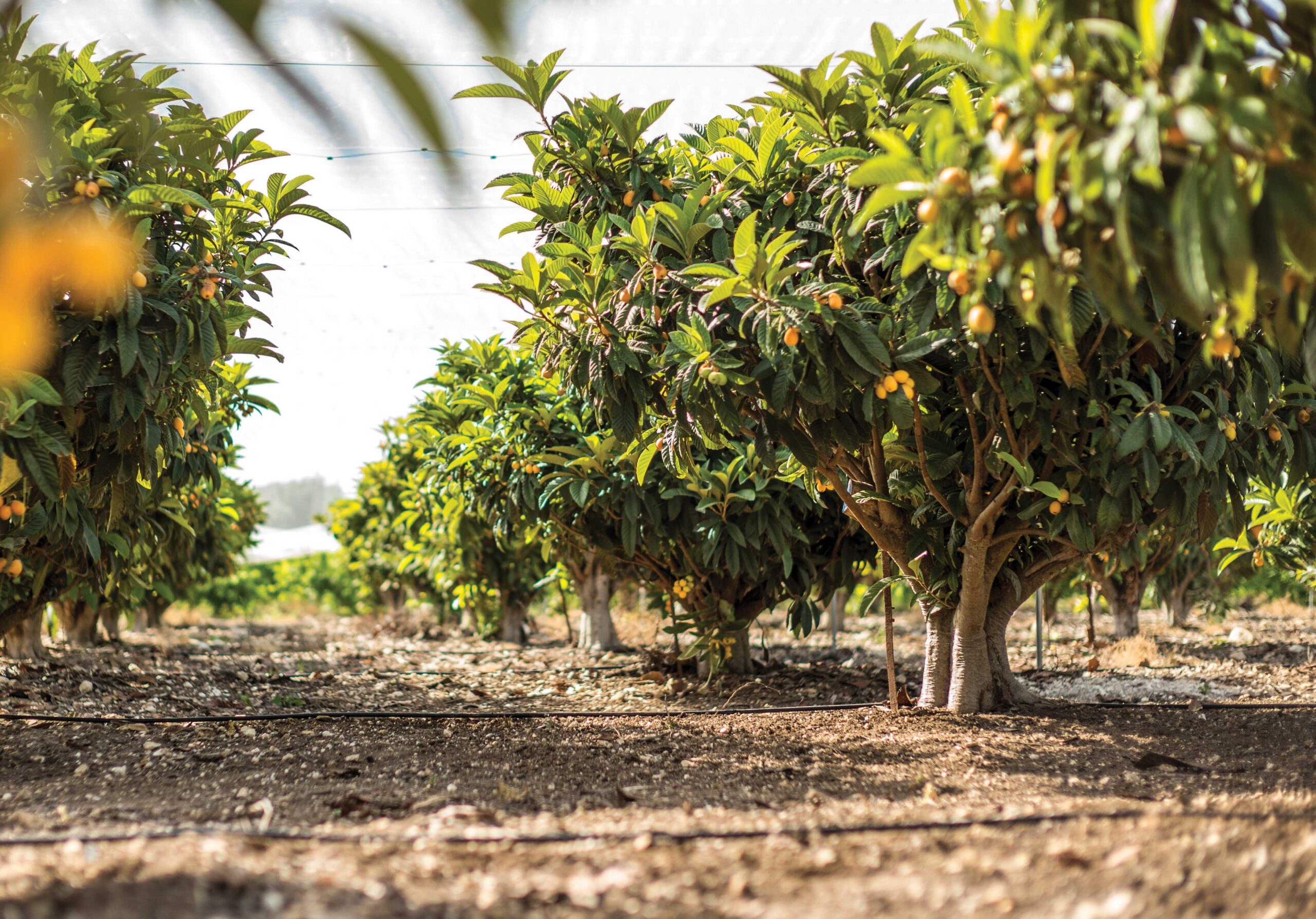
We all know that a localised irrigation system is always the most efficient solution in terms of water consumption, as these devices are designed to deliver water directly to the soil in the most efficient way possible. The amount of water supplied (the flow rate) depends on these devices; this water is then utilised by the plants, ensuring a high degree of irrigation uniformity. But what other factors should be taken into account when choosing a dripper?
The first step in learning a little more about these drippers is to classify them. Drip irrigation emitters, or drippers, can be categorised in two main ways:
· From an industrial perspective: cylindrical and flat drippers
· From a fluid dynamics perspective: self-compensating and turbulent drippers.
If we focus on the fluid dynamics perspective, we can define:
SELF-LEVELLING
These drippers are capable of maintaining a consistent flow rate thanks to an internal silicone membrane, which is their main feature and advantage. This component enables the dripper to maintain a consistent flow rate across a wide range of operating pressures, thereby allowing us to:
· Longer maximum branch lengths.
· Efficient operation on uneven, sloping ground.
· To ensure more efficient management of the facility.

Within our extensive range of self-regulating drippers, all of which are fitted with a self-cleaning mechanism, we can find some real gems of industrial design:
· Vered. Our most versatile flat dripper, capable of handling hard water and suspended organic matter thanks to its large filter screen. For this reason, Vered is frequently used on plots where water quality is not always the best.
· Inbar. This is the best anti-drainage flat dripper on the market, as it is able to keep the lateral lines pressurised when irrigation stops. Ideal for pulse irrigation of highly specialised crops such as avocados or citrus fruits.
· Assif. Thanks to its anti-suction mechanism, Assif is particularly well suited as a safety valve for underground irrigation systems; when combined with RootGuard® technology – the only root-proof option on the market – it will ensure your underground system operates perfectly for over 10 years.
TURBULENT
Unlike self-compensating drippers, the defining feature of turbulent drippers is the labyrinth structure, the design of which determines the degree of turbulence of the water and particles passing through it; consequently, this is a key factor in distinguishing a good dripper.
All these differences will mean that the same turbulent dripper will deliver a different flow rate depending on the operating pressure set. The absence of a membrane capable of adapting a single flow rate to different pressures – a feature found in self-compensating drippers – will result in:
· Reduction in the maximum branch length (shorter branches).
· Suitable for terrain with gentle slopes (flat surfaces).

At Caudal, we’re committed to reliable, carefully designed drippers to top our range of turbulent drippers. But there’s more! Our drippers are designed, engineered and adapted to work in pipes with different wall thicknesses:
· Thin or tape-like: Micro Linor Mini Lin. Specially designed for single- or multi-season crops, where the material must be disposed of once its useful life has ended.
· Medium or heavy-duty: Lin Plus, Super Compact, Idit or Ultra. These drippers, when used with medium or heavy-duty tubing, can be installed for use over many growing seasons or in permanent crops such as vines, olive trees or almond trees.
Each crop, soil type and climate, amongst other factors, will determine the final configuration of the irrigation solution best suited to your plot, establishing final parameters such as flow rate, distance between drippers, diameter and wall thickness; thereby ensuring proper overlap between emitters and, consequently, increased water efficiency and yield.
Our aim is to help customers choose the best option for their installation. You can find more information in our section on pipes with integrated drip lines.