



Why is it so important to diagnose high blood pressure without wasting any time?
Picture this: you arrive at your plot one Monday morning and, suddenly, you notice that some of the plants look a bit odd, as if they’re wilting. At first, you think it’s the heat or something to do with the weather, but as the days go by, the pattern repeats itself, doesn’t it? You check the drippers and – surprise, surprise! – the pressure isn’t the same throughout the system. This situation, which is more common than it seems, teaches us a very clear lesson: you have to be quick and precise to spot any pressure problems!
Irrigation efficiency: every drop counts
A drip irrigation system operating at the correct pressure is a real champion when it comes to water use. Bear in mind that every drop is a treasure here: targeted irrigation minimises evaporation, prevents water from running off the surface and greatly improves distribution, whilst also reducing the amount of water lost into the deeper soil layers. If the pressure fluctuates, the water isn’t distributed properly, and that, my friend, is a waste of such a valuable resource!
A direct impact on your crops and your pocket
And it’s not just water that’s at stake – it’s your crops! Unbalanced pressure takes a direct toll on them, affecting their health and productivity. If your plants don’t get their ‘fair share’ of water or fertiliser, they suffer from stress, grow unevenly and, ultimately, your harvest will be smaller and of lower quality. What we want is uniform irrigation, don’t we? That’s what ensures that every plant, at every stage of its life cycle, receives exactly what it needs to perform at its best.
Tools to ‘check the health’ of your irrigation system
To get to grips with pressure problems, you need your ‘eyes’ inside that network of pipes. They’re your trusted tools.
Pressure gauges: your eyes on the network
The pressure gauge is, without a doubt, your ‘trusted companion’ in this task. With it, you’ll know instantly whether your system is operating at the correct pressure, or whether there are any dangerous spikes or drops. Bourdon-type gauges are the most common and easiest to use. Where should you fit them? Think of strategic points: at the pump outlet, before and after the filters and fertiliser equipment, and right at the start of each unit and tertiary pipework. An expert tip? Measure the pressure difference across your filters: if the reading rises significantly (more than 0.5–0.6 kg/cm²), it’s a clear sign that it’s time for a clean! And a personal tip: install them on straight sections of pipe, away from bends, so that the readings are as accurate as possible.
Flow meters: to find out ‘how much’ water you’re carrying
Flow meters (or meters, as we sometimes call them) are your perfect ally for finding out how much water is circulating and what volume you’ve applied. Woltman-type meters are extremely reliable for measuring total volume. Do you need the flow rate straight away, for example, to adjust your fertiliser application? Rotameters are brilliant for that – they give you the reading instantly. If you fit meters at the start of the system and in each sector, you’ll have complete control over the water and will be able to spot any leaks before they cause a mess.
Smart sensors and remote monitoring: the future is here
And for those who are always up to date with the latest technology, smart sensors and remote monitoring are absolutely brilliant! We’re talking about pH and electrical conductivity sensors, and digital meters that send precise data straight to your computer or mobile. This is ‘pure gold’ for high-value crops, where every gram of fertiliser and every drop of water really counts. Just imagine: filters that clean themselves, ultra-precise fertilisation and irrigation systems that automatically adjust to your plants’ needs in real time. Now that’s a pleasure to work with!
The most common pressure problems in drip irrigation
Once you’ve got the hang of the tools, it’s time to identify the most common problems.
‘Thirsty’ drippers: low pressure
Low pressure in the drippers is like that cough that keeps you awake at night – a clear warning sign! The causes? Often, the ground isn’t perfectly level (there are uneven patches) or the main pipe is too long. On a slope, if the drippers aren’t self-compensating, the ones at the bottom will water much more than the ones at the top, won’t they? A poorly designed hydraulic system is also largely to blame, especially if the network has expanded and you now have more irrigators than were originally planned.
Blockages in the veins!: blockages in pipes
Blockages are undoubtedly the ‘biggest headache’ for any farmer. We can divide them into three main types:
- Physical: When water carries sand, silt, algae, or even small pieces of plastic or debris from the installation.
- Chemical: These are formed by the precipitation of salts (such as calcium and iron) or by reactions between fertilisers and water, particularly if the water becomes stagnant in a particular spot or evaporates significantly.
- Biological: The growth of algae, bacteria or even roots inside the net or drippers, which gradually block the flow.
And watch out! Low-flow showerheads – those that dispense less than 16 litres per hour – are the most likely to become blocked. They’re like a magnet for dirt!
“Tiny holes”: leaks and faulty connections
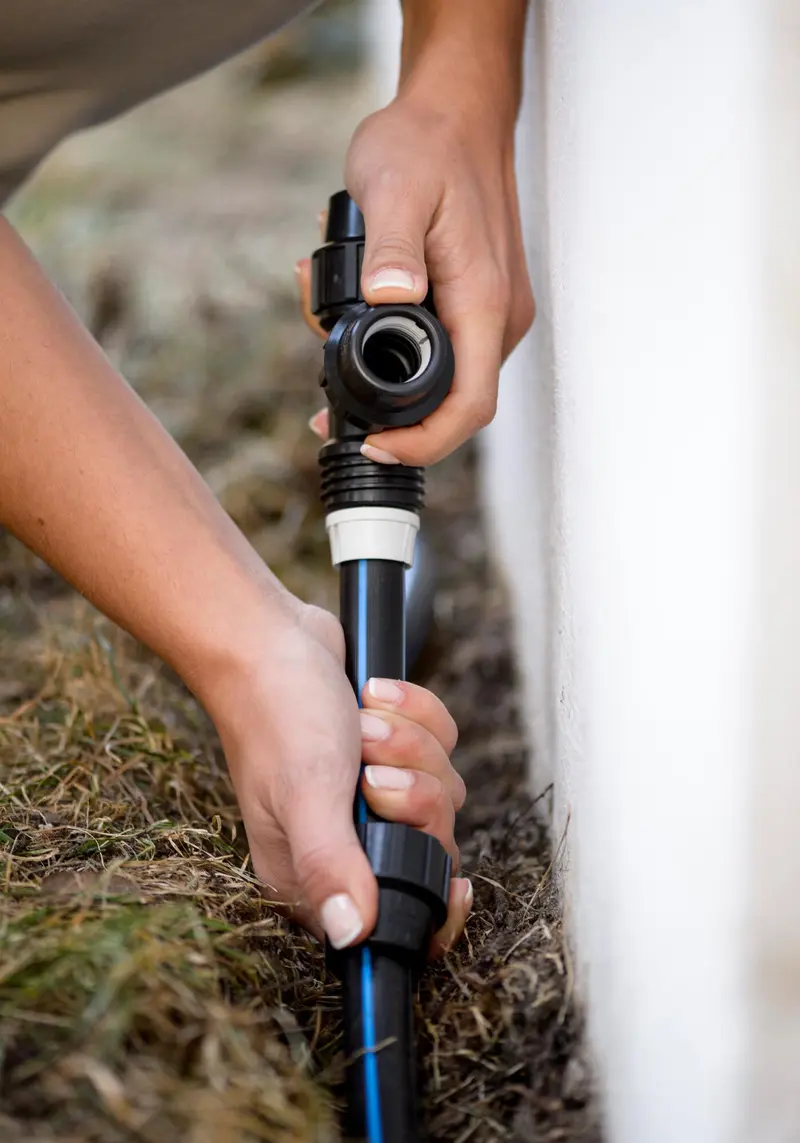
Leaks and faulty connections are one of those ‘insidious’ things: a silent problem that gradually ‘steals’ pressure from you, without you even realising it. They can occur due to manufacturing faults, installation that wasn’t quite done properly, or simply the natural wear and tear of materials. The solution? Frequent visual inspections. Spotting them early is the best way to save yourself a fair bit of money!
Practical solutions and preventive maintenance: prevention is better than cure
The good news is that most of these problems can be solved. And best of all, many of them can be prevented with proper maintenance!
A ‘shower’ for your system: regular cleaning
Regular cleaning is like your protective shield against problems.
- Filters: These are your first line of defence. Clean them when the pressure difference between the inlet and outlet exceeds 0.5–0.6 kg/cm². Sand filters are excellent for organic matter; mesh or ring filters are ideal for suspended solids.
- Warning! This is crucial: never, under any circumstances, mix bleach with acids, as this releases extremely toxic gases. This is a very serious risk that must always be avoided.
- Chemical treatments: For calcium, acidify the water! A pH between 5.5 and 6.5 prevents precipitates from forming. If the problem is iron, sulphuric acid will be a great help. And for those pesky algae and bacteria, chlorination with sodium hypochlorite is very effective.
- Flushing the pipes: When the season starts, give the whole system a ‘clean-up’: run the water through at a slightly higher pressure than usual and open the pipe outlets (yes, the side ones too!) to flush out any dirt that has built up.
- Tank maintenance: If you use reservoirs, cover them with shade netting. This reduces algae growth and, at the same time, minimises evaporation.
Your network’s ‘tuner’: adjusting valves and regulators
Adjusting valves and regulators is essential to ensure everything runs smoothly. Pressure regulators are vital for maintaining a constant pressure, especially if you have uneven terrain. Install them at the start of each irrigation sub-unit. Did you know that there are also flow-limiting valves? These prevent a user from ‘overusing’ the resource by controlling the amount of water that flows out. Don’t forget to check the indicators and moving parts of your valves regularly; a small misalignment can cause you a major headache!
When components need to be ‘retired’: replacing parts
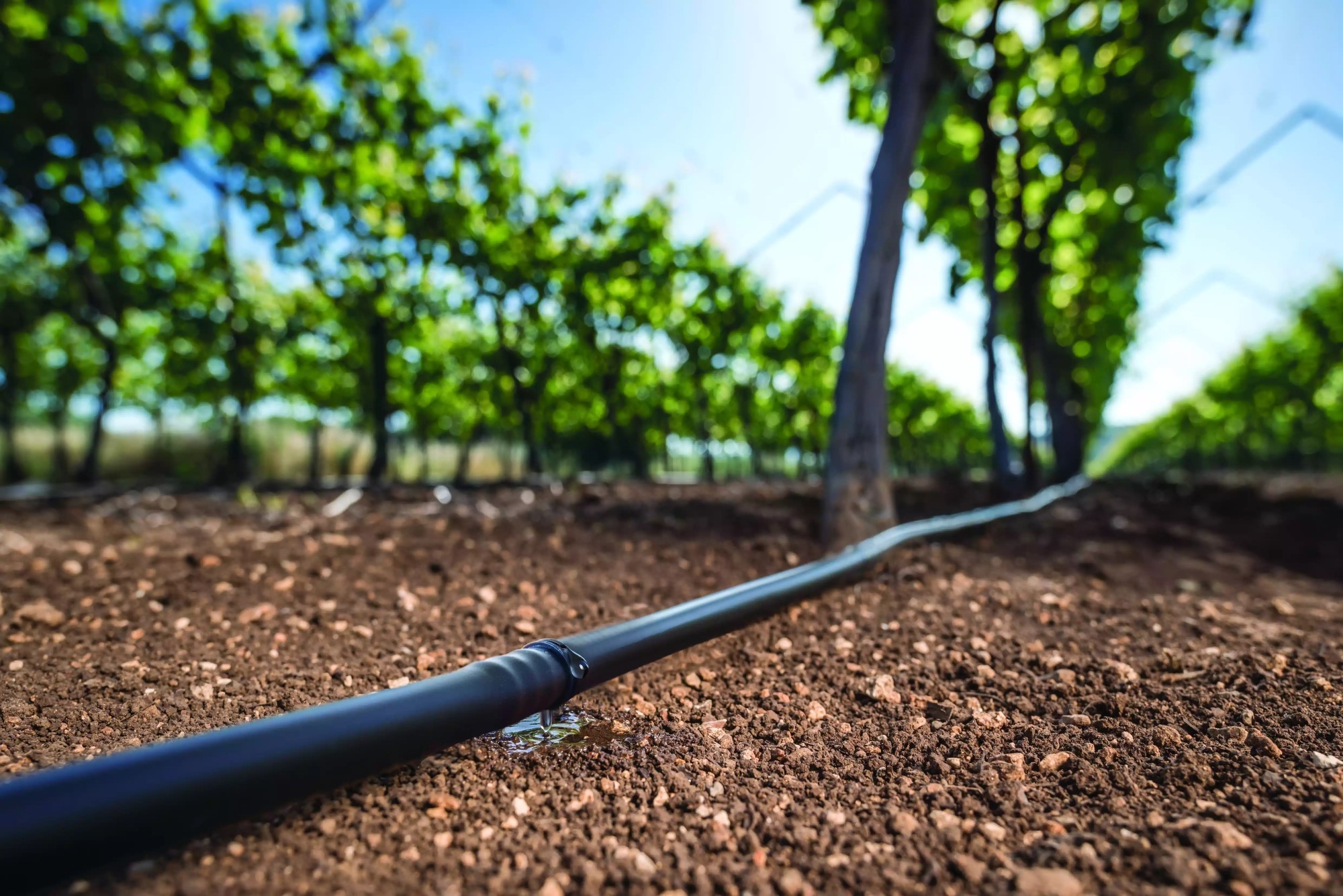
Sometimes, there’s no getting round it: old parts simply have had their day. Replacing worn components is an inevitable part of maintenance. If a dripper becomes hopelessly blocked, replace it without a second thought! Trying to unblock it – especially if it’s a self-compensating dripper – can damage it even further or puncture its membrane. Check the seals, fittings and pipes regularly for cracks or holes. And bear this in mind: investing in good-quality materials from the outset will save you a lot of hassle and money in the long run.
Conclusions and best practice: your harvest, your investment
Keeping your irrigation system in tip-top condition is a constant task, I know, but the benefits are enormous! A good initial design, choosing the right equipment and regular maintenance are the ‘four pillars’ of your farm. Not only will you save on water and fertiliser, but your crops will grow evenly, giving you the best possible harvest. It’s an investment that always pays off!
My advice as an agronomist, based on experience, is clear: prevention is always cheaper than cure! Before each growing season, take the time to carry out a thorough check of the entire system. During irrigation, always stay alert. And at the slightest sign of a pressure problem, don’t ignore it! Acting quickly is crucial. Your crop – and, of course, your bottom line – will thank you for it!
Frequently Asked Questions on Pressure Diagnosis in Irrigation Systems
How do I know if I have a pressure problem with my irrigation system?
If you notice that the water isn’t flowing equally from all the drippers, or that some areas of your crop aren’t being watered properly, there’s most likely a problem with the water pressure. It’s time to investigate!
Which tool is essential for measuring pressure?
A pressure gauge is the basic and most important tool for measuring pressure. I recommend that you fit several of them at different points in your system to ensure a thorough diagnosis and leave no room for doubt.
What is the ideal water pressure to ensure my drip irrigation system works perfectly?
Generally, the recommended pressure for drip irrigation emitters to work properly is around 1 kg/cm² (or, as we say in the field, a ‘kilo’). For pressure-compensating drippers, this can vary slightly more, between 0.5 and 3 kg/cm². But bear in mind that the ideal pressure may vary depending on the type of dripper you use and the crop you’re growing.