

What is subsurface irrigation (SDI)?
Definition and operating principle
Subsurface drip irrigation (SDI) is currently one of the most advanced solutions in precision agriculture for perennial crops. Its design allows water and nutrients to be applied directly to the active root zone, maximising water efficiency and minimising losses due to evaporation (zero evaporation) and runoff.
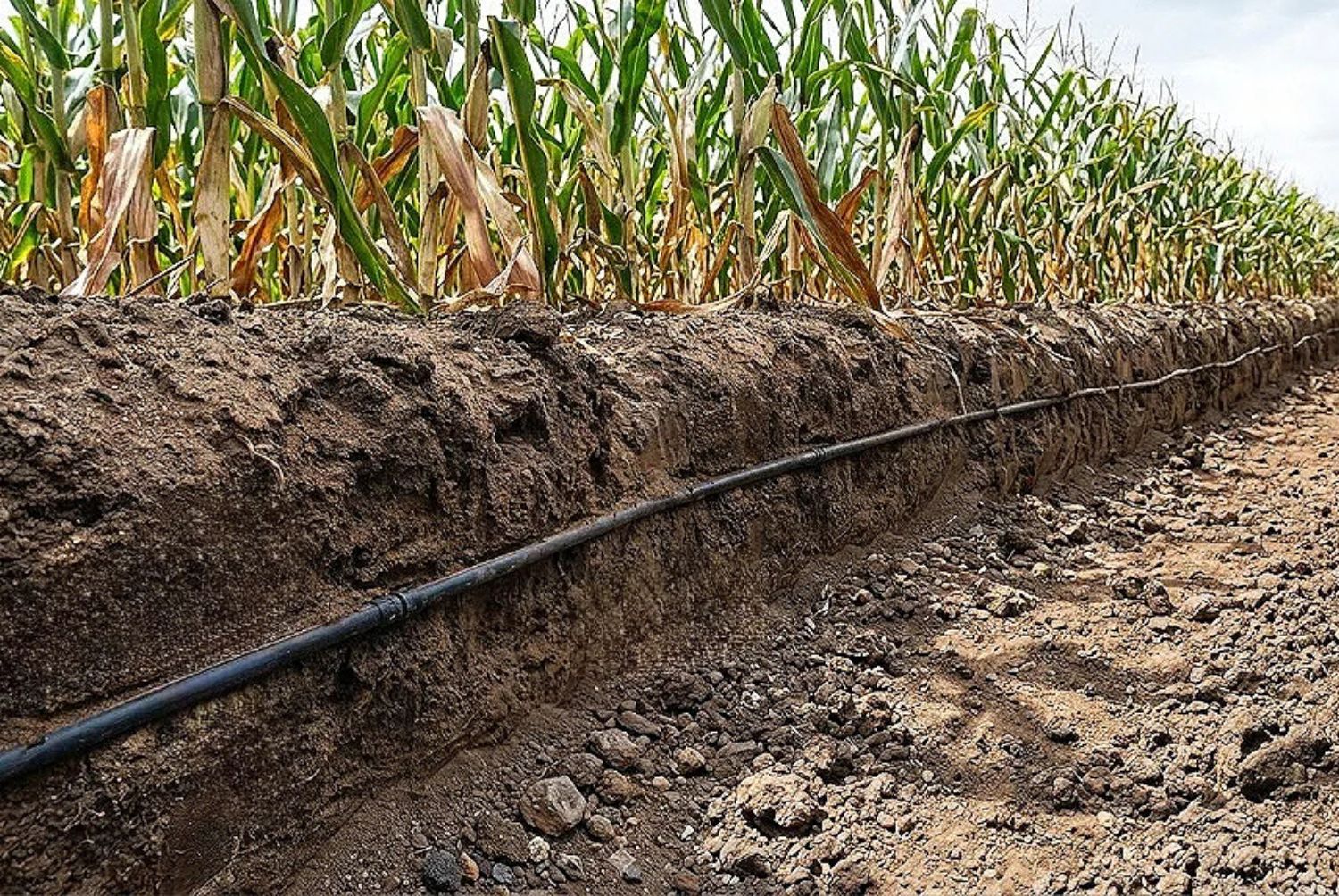
The SDI system is based on the installation of pipes with integrated drippers at a depth that usually ranges between 20 and 50 cm, depending on the soil type, the crop and the agronomic strategy. This arrangement virtually eliminates surface evaporation losses and reduces run-off, achieving application efficiencies of over 90–95 per cent.
Differences compared with surface irrigation
Unlike surface irrigation, keeping the soil surface dry limits weed growth and reduces the incidence of fungal diseases. An additional advantage is that it makes it easier to use machinery.
From a physiological point of view, subsurface irrigation encourages deeper and more uniform root development. The roots tend to concentrate around the moist zone created by the emitters, which improves the uptake of water and nutrients.
History and development of SDI technology
The first documented applications of subsurface irrigation date back to the 1960s, but it was not until the 1990s that improvements in plastic materials and automation made it viable on a commercial scale. Today, SDI technology incorporates self-regulating drippers, root protection and remote control systems, making it the most advanced option for permanent crops.
Components of an underground irrigation system
Pipe with integrated dripper, for burial
At the heart of the system is the pipe with an integrated dripper, designed to be laid underground. It must withstand soil pressure, resist root intrusion and ensure uniform water release for decades. Choosing the right dripper is crucial to the system’s durability.
Optimal installation depth
The installation depth usually ranges from 20 to 50 cm. It must be determined on the basis of soil type, crop and agronomic strategy. It is essential to develop a sound agronomic and hydraulic design, taking into account soil texture, the effective depth of the root system and the crop’s water requirements.
Anti-root technology: RootGuard
Root intrusion is a complex process influenced by a number of factors: plant species, crop vigour, soil texture, irrigation frequency and hydraulic design. In perennial crops such as olive groves, almond orchards, vineyards and citrus plantations — where the root system is persistent and aggressive — this problem is particularly significant. Without an appropriate solution, the system’s service life may be significantly reduced.
Caudal’s RootGuard incorporates a protection system based on the controlled release of a compound that acts as a root growth inhibitor in the soil surrounding the dripper outlet. This compound is formulated to remain localised and active for long periods. Unlike other solutions, it requires no external applications or additional maintenance, and its effectiveness is guaranteed for a minimum of ten years.
Filtration and clogging control
Water quality and the filtration system remain critical factors in preventing blockages of a physical or chemical nature. The use of flow meters and pressure switches to monitor instantaneous flow rate and operating pressure helps to detect potential blockages.
Irrigation head and automation
The control unit is the nerve centre of the system. It incorporates the filtration equipment, fertigation system, solenoid valves and the controller. In modern installations, the control unit connects to remote management platforms that allow users to programme irrigation, monitor water consumption and receive fault alerts from any device.
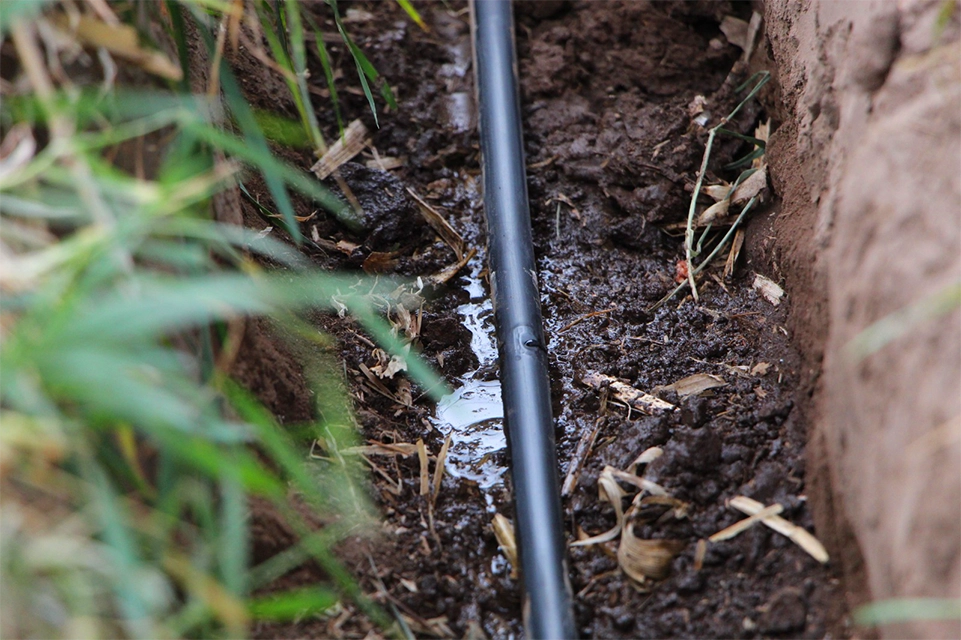
Advantages of subsurface irrigation for perennial crops
- Water efficiency: up to 95% efficiency: the SDI system achieves application efficiencies of over 90–95 per cent, compared with 70–80 per cent for conventional surface irrigation systems.
- Elimination of evaporation and run-off: its design allows water to be applied directly to the root zone, minimising losses due to evaporation (zero evaporation) and run-off.
- Deep and uniform root development: Subsurface irrigation promotes deeper and more uniform root development, with roots concentrated around the moist bulb, thereby improving the uptake of water and nutrients.
- No interference with agricultural work: It allows for the complete mechanisation of the plot without any interference. In intensive and super-intensive systems, this translates into a direct reduction in operating costs.
- Weed control: As the soil surface remains dry, weed growth is limited and the need for herbicide treatments is reduced.
- Lower incidence of disease: The dry surface eliminates the damp environment that encourages fungal diseases, reducing the need for fungicides.
- System lifespan: 15–20 years: Fewer breakdowns, improved uniformity and greater durability make the investment worthwhile. In perennial crops, where the production cycle is long, the return on investment is usually favourable.
- Precise fertigation application: By ensuring the integrity of the emitters, a uniform distribution of nutrients is achieved, allowing for more precise adjustment of application rates and improving the efficiency of fertiliser use. This is particularly important for high-value crops.
Applications by type of perennial crop
Almond tree in a super-intensive system
In super-intensive almond orchards, the SDI system eliminates interference with harvesting machinery and helps keep the soil dry, thereby reducing the risk of disease. The recommended depth ranges from 30 to 40 cm to accommodate the characteristic root distribution of this crop.
Pistachero: success stories
The pistachio tree, with its deep root system and tolerance to water stress, responds very well to SDI. Subsurface irrigation allows for the application of controlled water deficit at key stages of the growth cycle, improving fruit quality without compromising yield.
Vineyard: oenological benefits
In the vineyard, the SDI system enables precise control of the plant’s water status, directly influencing the aromatic profile and quality of the grapes. Furthermore, it keeps the soil between the vines dry, making it easier for machinery to pass through and reducing soil compaction.
Intensive and super-intensive olive groves
Root intrusion is exacerbated under water stress conditions, which are common in olive groves. The combination of subsurface irrigation and RootGuard technology has been shown to improve water use efficiency, reduce maintenance costs and increase productivity in intensive and super-intensive systems.
Citrus fruits: experience in Valencia
In growing regions such as Valencia, the use of SDI in citrus cultivation has made it possible to reduce water consumption whilst maintaining high yields and quality. The absence of surface moisture also reduces the growth of weeds along the farm tracks.
Avocado: precise water management
Avocados are a crop that is highly sensitive to both excess and deficiency of water. The SDI system allows for short, frequent irrigation cycles that maintain soil moisture in the root zone within the optimum range, improving fruit set and reducing fruit drop.
Installation of an underground irrigation system
Site preparation
Before installation, it is essential to level the ground, remove stones and plant debris that could damage the pipework, and carry out a full soil analysis. Inadequate preparation compromises the uniformity of the installation and the durability of the system.
Specialised installation machinery
Installation is carried out using subsoilers or rippers fitted with a pipe reel that lays the pipe directly at the programmed depth. This machinery allows work to progress at a rate of between 1 and 3 hectares per day, depending on the type of soil.
Depth depending on soil type and crop
The planting depth ranges from 20 to 50 cm. In clay soils, shallower depths ensure that the soil moisture is well distributed. In sandy soils or where deep-rooted crops are grown, a depth of more than 35–40 cm is recommended.
Distance between rows and drippers
The distance between rows and the spacing between drippers are determined by the planting pattern, soil texture and the crop’s water requirements. In super-intensive almond cultivation, it is common to have one row of trees per row with drippers spaced 50–75 cm apart.
Commissioning protocols
The use of pipes featuring Caudal’s RootGuard technology does not involve any significant changes compared with a conventional SDI system. It is important to note that, in the case of the flat dripper (PC700AS), this must be installed facing upwards.
Maintenance and durability
Preventing blockages
One of the main benefits of Caudal’s RootGuard is the reduction in corrective measures relating to root intrusion. Nevertheless, it is recommended that regular cleaning protocols be maintained, including flushing and chemical treatments where necessary.
Cleaning and flushing the system
It is recommended that the system be flushed at least once per growing season, by opening the ends of the pipes to remove any accumulated sediment. Treatments with acid or chlorine help to prevent blockages caused by biological growth.
Monitoring and fault detection
The use of flow meters and pressure switches that indicate the instantaneous flow rate and operating pressure helps to detect potential blockages at an early stage, before they affect the crop.
Expected service life of the system
With Caudal’s RootGuard technology, a high level of uniformity is maintained throughout the system’s service life. In conventional SDI systems without root protection, it is common to observe a gradual reduction in flow rate due to partial blockages, which leads to imbalances in crop development.
Cost-benefit analysis
Initial investment vs. floor area
The economic analysis must take into account not only the initial investment, but also the operating costs and the system’s service life. Although the cost per linear metre may be higher than that of a conventional pipe, the reduction in breakdowns, the improvement in uniformity and the greater durability more than make up for the investment.
Annual operational savings
Water savings of 30–35 per cent, reduced herbicide use, lower labour requirements for maintenance and the elimination of damage caused by machinery result in significant operational savings that improve the farm’s net profit margin each growing season.
System depreciation
For perennial crops with a productive lifespan of 20–30 years, the payback period for the SDI system is typically between 5 and 8 years, depending on the crop, the price of water and local labour costs.
ROI on permanent crops
In perennial crops, where the production cycle is long, the return is usually favourable. The combination of greater efficiency, lower maintenance and longer durability makes SDI the option with the best long-term ROI.
Caudal Solutions for underground irrigation
PC700 RootGuard range
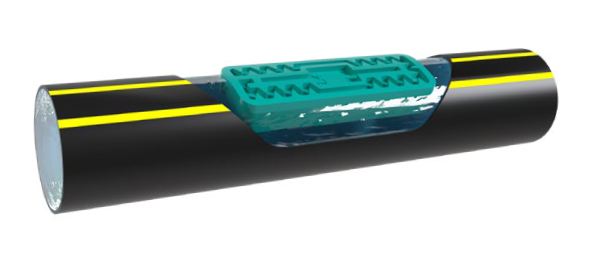
At Caudal, we offer solutions such as the PC700AS with RootGuard, which incorporates this technology into a flat, self-compensating dripper designed specifically for underground installations in perennial crops.
PC700 ND RootGuard range
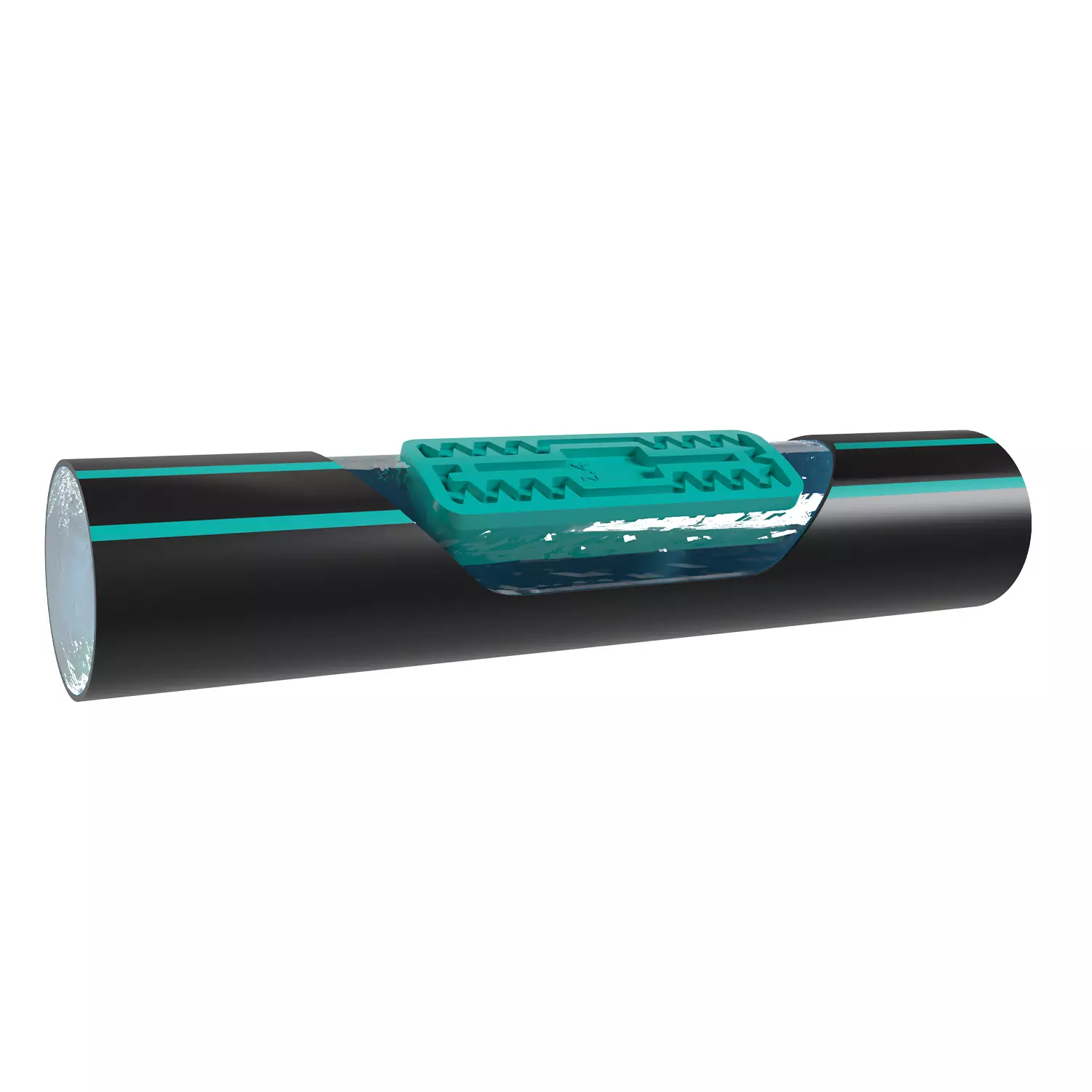
The PC700 ND RootGuard range features the same root protection in a non-self-levelling format, suitable for plots with minimal differences in ground level where a more cost-effective solution is required without compromising on protection against root intrusion.
Technical specifications and benefits
Caudal’s RootGuard incorporates a protection system based on the controlled release of a root growth inhibitor. It requires no external applications or additional maintenance, and its effectiveness is guaranteed for a minimum of ten years. The anti-suction drippers prevent water from entering the pipe from the ground, improving resistance to both biological and physical blockages.
Frequently asked questions about underground irrigation
What is subsurface irrigation (SDI)?
It is a drip irrigation system in which the pipework and emitters are installed beneath the soil surface, delivering water directly to the root zone.
At what depth is underground irrigation installed?
Usually between 20 and 50 cm, depending on the type of soil and the crop.
How long does an underground irrigation system last?
With RootGuard technology, the guaranteed service life exceeds 10 years, and under normal conditions it reaches 15–20 years.
What maintenance does underground irrigation require?
Regular flushing, preventative measures against blockages and an inspection of the filtration system.