

Proper water management is an extremely sensitive issue throughout the world, and water scarcity has become an increasingly serious problem. The circular economy is a solution that has been widely implemented over the last two decades in urban and agricultural irrigation systems, with the aim of ensuring water efficiency in an environment of increasingly limited resources and where droughts tend to be more prolonged.
In this article, we examine the importance of the circular economy in water management, specifically through the production and use of reclaimed water. We will also analyse the benefits of its application in agriculture and how current Spanish legislation is promoting the circular economy and water reuse.
Wastewater: what is it and how is it treated?
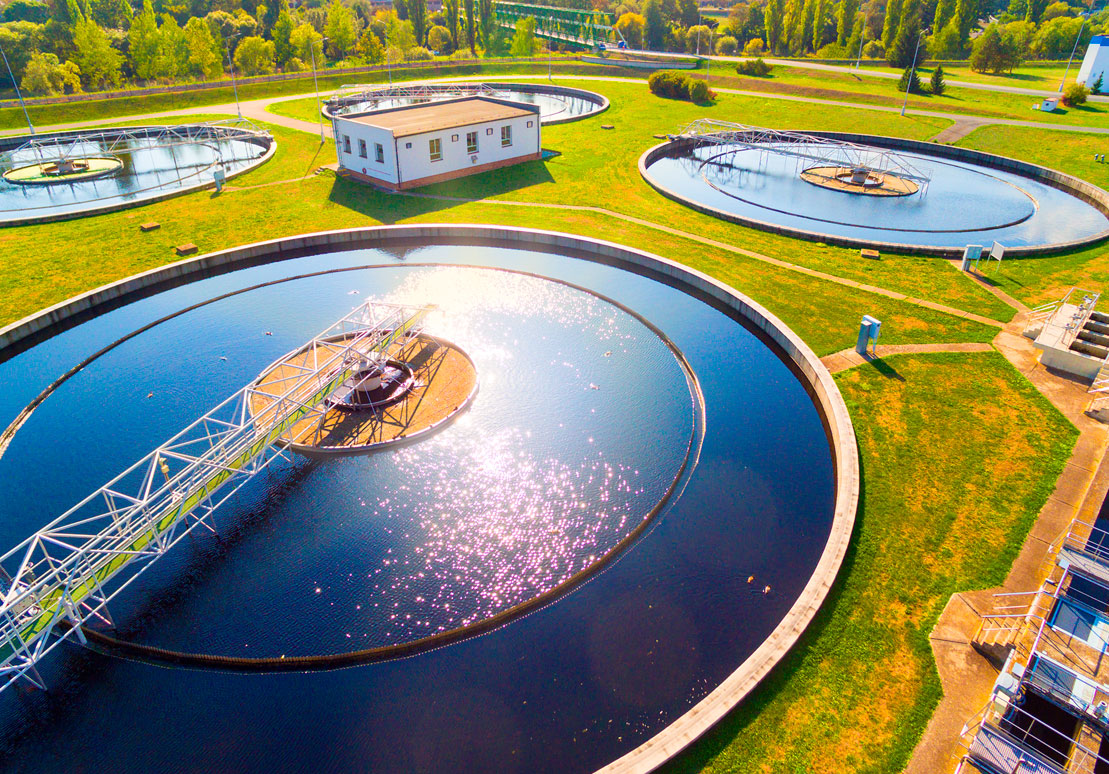
Wastewater is water that has been used in domestic or industrial settings and contains certain pollutants, biological residues and chemicals. Before this water can be reused for other purposes, it must be treated to reduce pollutant concentrations and ensure a high-quality supply.
Wastewater treatment involves a variety of biological, chemical and physical methods to reduce pollutant concentrations and produce a usable resource. Such pollutants may include inorganic solids, dissolved solids, organic matter, heavy metals, floating materials (oil and grease), microorganisms and nutrients, amongst others.
The Spanish Reclaimed Water Economy
Water reuse is a process that involves using treated wastewater for other purposes, such as crop irrigation, street cleaning and aquifer recharge, amongst others.
In recent years, the implementation of policies and projects has emerged as one of the key factors in ensuring water security, alongside other measures such as:
· Proper planning
· Policies to raise awareness of water saving
· Investment in improving efficiency
In Spain, the percentage of reclaimed water accounts for 10.72 per cent of the water entering wastewater treatment plants (WWTPs), placing the country at the forefront of Europe in terms of water reclamation. Furthermore, Spain ranks fifth worldwide in terms of installed reclamation capacity.
Currently, Spanish legislation permits the use of reclaimed water for specific applications such as urban, agricultural, environmental or industrial uses, under Royal Decree 1620/2007. This represents a significant step forward in the country’s water planning. Furthermore, the Climate Change and Ecological Transition Act, which transposes European directives, aims to combat climate change and promote decarbonisation and the circular economy. In this context, the importance of water reclamation is highlighted as a key measure for achieving these objectives.
The Spanish Circular Economy Strategy, ‘España Circular 2030’, which is aligned with the European Union’s circular economy action plans, identifies the treatment and reuse of reclaimed water as a key priority, given its significant impact on the Spanish economy and the country’s leadership in this area. However, according to a 2022 report by the AEAS, only 7.1 per cent of Spain’s water supply comes from reclaimed sources, mainly used for agriculture (49 per cent), followed by industry (12 per cent) and garden irrigation (9 per cent).
Benefits of using reclaimed water in agriculture
The use of reclaimed water in agriculture has several benefits.
· Nutrient-rich water. This helps to reduce the amount of conventional fertilisers used. This enables farmers to reduce their costs per hectare to some extent.
· Positive impact on soil quality. By supplying nutrients, minerals and other organic compounds, this will improve soil structure and, consequently, increase crop productivity.
· It is environmentally friendly. Using reclaimed water to irrigate crops or pasture is a sustainable and low-cost way of conserving water and reducing waste.
· Higher-quality crops. Water stress can have a dramatic impact on the quality of agricultural produce, and has been a very real issue in recent years. Water availability is steadily declining, which prevents farmers from producing higher-quality crops and pasture, thereby affecting their incomes.
What are the challenges involved in using reclaimed water?
Not all reclaimed water is the same.
Following primary treatment, which removes between 50 and 70 per cent of suspended solids such as sand, oil and debris, the effluent must undergo secondary treatment to separate out the remaining dissolved and suspended organic matter.
These treatment methods can improve the quality of reclaimed water, but they are not sufficient to ensure that crops can be irrigated safely. Pathogens can also be carried by sprinkler irrigation onto fresh edible crops. There is also a risk of cross-contamination between drinking water and inadequately treated wastewater.
These risks can be eliminated through tertiary treatment using sand or membrane filtration, and additional disinfection processes or other alternative treatments currently under development to remove harmful microorganisms. The water can then be used on a variety of crops, ranging from horticultural to woody plants, as well as in urban settings.
In conclusion, without reclaimed water, it will be difficult to guarantee water security due to the lack of availability increasingly affecting more and more regions. In the coming years, water reclamation is expected to increase due to the effects of climate change, and a clear example of this is the Reutivar project, based in the Montilla Irrigation Community, which has been able to provide a livelihood and the opportunity to continue their farming activities to hundreds of farmers in the area.
To support the search for solutions and alternatives that guarantee an efficient and safe water supply, Caudal has developed, alongside our underground irrigation range (RGS), our self-compensating anti-siphon pipe, specifically designed for use with reclaimed water. This purple-coloured pipe is specially designed for reclaimed water networks that undergo additional purification treatments, enabling the water to be reused as a safe, high-quality resource. It offers high reliability and durability once installed, thanks to its anti-suction emitters, which are specially designed to operate underground. It also has the unique feature that it can be installed either above ground or underground, as required.