


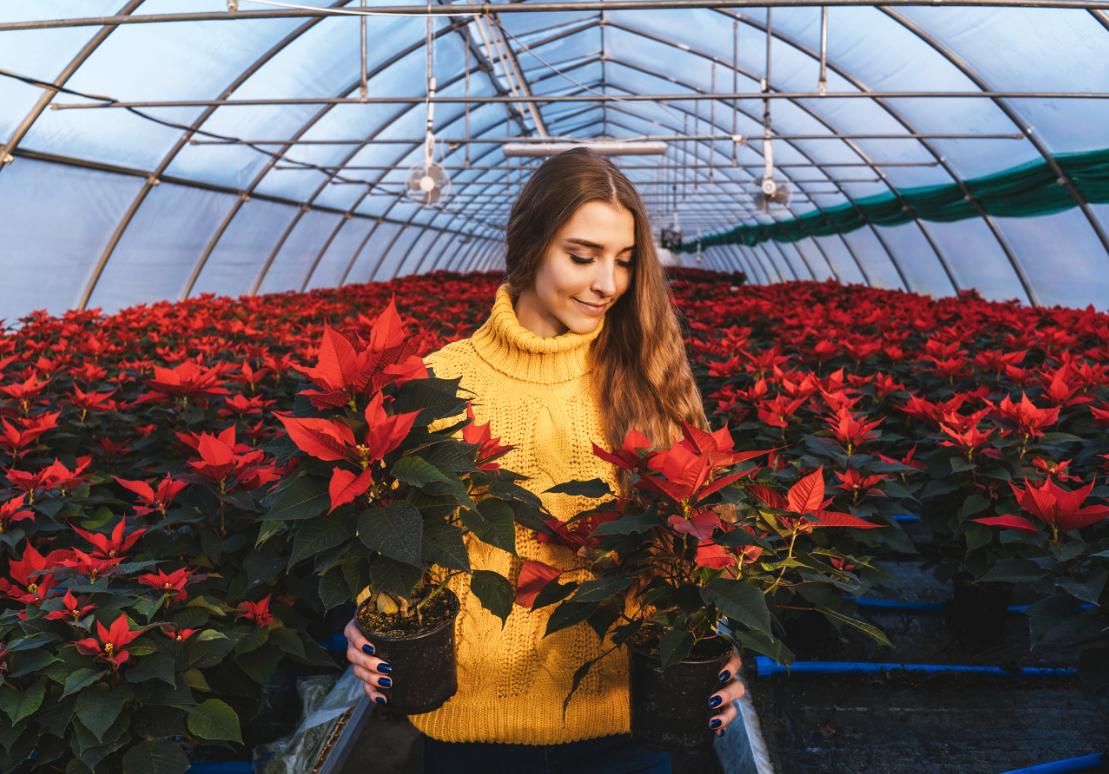
Euphorbia pulcherrima is the scientific name for the traditional poinsettia; its distinctive red colour is what makes it a classic part of Christmas traditions. Have you ever wondered where it comes from and why it’s such a characteristic Christmas flower?
One of the most common traditions in Spain at this festive time of year is to buy one of these ornamental plants, but its origins lie across the pond, specifically in Mexico. In Mexico, more than 100 different species of this flower are grown; it is also known as the Christmas Eve flower, Christmas flower, Inca’s Crown, Pastora or Poinsettia.
The Aztecs cultivated them for medicinal and ceremonial purposes because of their striking red colour, but it was the Franciscans who began using them as decorations during the Christmas festivities, as the plant flowers in December and January. And to say that it ‘blooms’ is rather inaccurate, as what turns reddish (or other colours) are not the petals but the plant’s leaves themselves.
Spain ranks as one of the European Union’s leading producers, producing around 9 million units. Andalusia (40 per cent) and the Levante and Murcia regions (20 per cent) account for more than half of total production. In 2021, Spain’s production stood at around 125,000 tonnes, surpassing other major producers such as France and Germany.
The poinsettia is very delicate and requires specific care to ensure it stays looking its best for longer. When you buy your poinsettia:
· It should not have too many mature flowers.
· Avoid those with broken or rotten stems.
· Make sure it is well rooted.
This type of plant is perfectly suited to both indoor and outdoor environments (it can withstand temperatures as low as -2°C). It is therefore important to provide it with the right conditions for growth:
- Place the plant away from draughts
- Do not expose it to direct sunlight
- It needs to be kept moist; it is recommended that you water it twice a week if it is outdoors and once a week if it is indoors
- To prevent neurotic spots appearing on the leaves, avoid spraying them with water and instead apply the water directly to the growing medium
- The fertilisation period will be divided into two stages: February–March (growth fertiliser) and October–November (fertiliser to promote flowering).
As regards the industrial-scale cultivation of poinsettias, they are grown in hydroponic greenhouses in pots using inert growing media such as coconut fibre.

From the point of view of water efficiency, choosing the right irrigation system will improve water utilisation, ensuring that water is applied precisely and evenly to each plant.
Undoubtedly, given the cultivation model used for most of our poinsettia production, the flexible EVA micro-tubing, together with various emitters (drippers, branch lines and stakes), is the perfect solution for ensuring the correct management of the water supplied. This is a small-diameter flexible pipe that allows us to reach hard-to-reach areas, such as plant pots.
Remember: Christmas without a poinsettia isn’t really Christmas.