

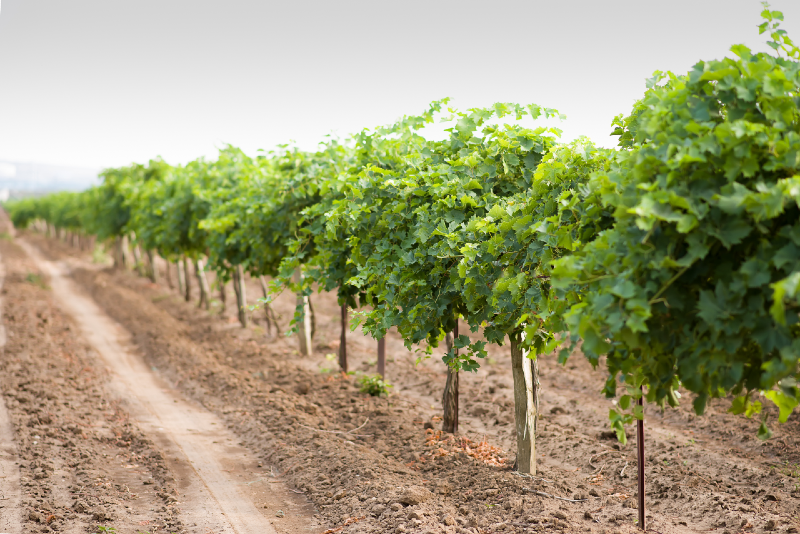
Do you know how to choose the ideal irrigation system? What type of soil do you have? Use this guide to learn how to improve your crop yields
If we want to maximise the profitability of our farm, we need an efficient irrigation system. One of the most important factors to consider when deciding which type of irrigation to implement and drawing up a suitable design is the soil.
Soil Characteristics
The physical and chemical properties of the soil are essential to understanding how the irrigation water we provide for our crops behaves.
Soil texture:
This refers to the proportion of sand, silt and clay particles in the soil.
- Sandy soils drain quickly, which can lead to water being lost rapidly through deep percolation.
- Clay soils have poorer drainage, which can lead to problems with waterlogging and ponding.
- Silty soils have good water-holding capacity, but may also require more careful management in terms of irrigation.
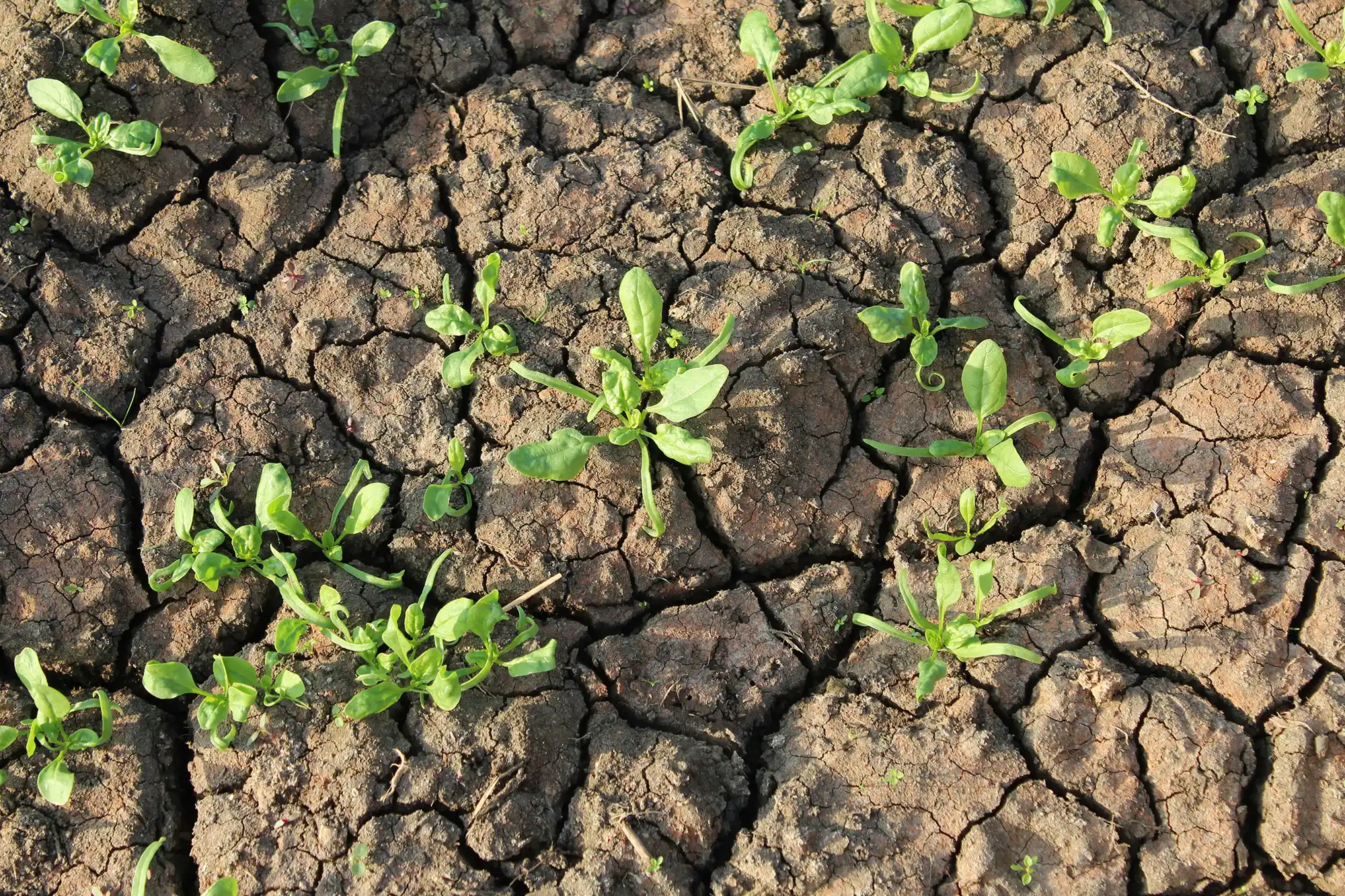
Water Retention Capacity
This is the amount of water that the soil can store for plants to use. It depends mainly on the texture of the soil.
- Soils with a high water-holding capacity (for example, clay soils) may require less frequent watering, but with larger amounts of water.
- Soils with low water-holding capacity (such as sandy soils) will require more frequent watering, but with smaller amounts of water.
Water Seepage:
It is the rate at which water seeps into the ground.
- In soils with high permeability (such as sandy soils), water filters through quickly, so more frequent but lighter watering is required to maintain moisture in the root zone.
- In soils with low infiltration (such as clay soils), water takes longer to penetrate, which can lead to water accumulating on the surface and a risk of waterlogging if it is not applied in moderation.
Soil Porosity:
It is the amount of empty space between soil particles, which allows air and water to circulate.
- More porous soils (usually sandy) allow water and air to move through them quickly, which aids drainage, but also means that more frequent, moderate watering is required.
- In soils with low porosity (such as clay soils), water and air circulation is slower, which can lead to waterlogging or compaction if over-irrigated.
Soil depth:
This is the depth to which plant roots can access water and nutrients.
- Deeper soils allow for greater water storage, which may enable irrigation to be carried out at longer intervals.
- In shallow soils, the roots cannot reach sufficient water, so irrigation must be more frequent and more precise.
Soil Compaction Conditions:
It is the degree to which soil particles are aggregated, which affects porosity and water flow.
- Compacted soil hinders the passage of water and air, which can lead to poor water distribution and encourage water to pool on the surface. This can result in areas of over- or under-watering.
Hydraulic Conductivity:
It is the soil’s ability to allow water to pass through it.
- Soils with high hydraulic conductivity allow water to move more easily.
- Soils with low conductivity require greater care when it comes to water distribution, as moisture may not move efficiently.
Cation Exchange Capacity (CEC):
It is the soil’s ability to retain cations (positive ions such as calcium, magnesium and potassium) on soil particles, which influences the retention of nutrients and water.
- Although this is a more indirect effect, a higher CIC can help the soil retain water and nutrients more effectively, which can make irrigation more efficient by using less water to keep plants nourished.
Soil temperature:
Soil temperature influences water evaporation and biological activity.
- In warmer soils, evaporation will be higher, so more frequent watering may be necessary, particularly in hot climates.
- In cold soils, transpiration is lower, and watering must be more carefully controlled to prevent waterlogging.
Organic Matter Content:
Organic matter improves soil structure and its water-holding capacity.
- Soils with a high organic matter content have a greater capacity to retain water, which can reduce the frequency of watering required.
- Soils with low organic matter content usually require more frequent watering due to their lower water-holding capacity.
Understanding these characteristics is key to optimising irrigation systems, improving water use efficiency and preventing problems such as erosion or waterlogging. It should form a fundamental part of any farm’s irrigation conversion project.
Once we have characterised our farm, we need to assess the influence and interactions between the irrigation system, the soil and the plants.
By carefully selecting the flow rates of the emitters and the spacing between them, we can control the system’s rainfall and, consequently, its interaction with the soil and the plant.
§ Soils with high infiltration capacity and low water-holding capacity (sandy soils): opt for low rainfall rates and short, frequent irrigation cycles to prevent water loss through deep percolation. Use low-flow emitters spaced closely together.
§ Soils with good infiltration capacity and good water-holding capacity (loam soils): balanced irrigation that allows us to replenish the soil profile efficiently.
§ Soils with low infiltration capacity and good water-holding capacity (clay soils): irrigation with low rainfall rates that allows the soil profile to be replenished without causing erosion or losses through evaporation.
In sprinkler systems where there are problems with water seepage, low-flow sprinklers or micro-sprinklers should be used, spaced at moderate or short intervals; this will ensure adequate water penetration into the soil whilst controlling the system’s precipitation.
At CAUDAL, we stock a wide range of sprinklers for both agricultural and gardening use.
We must bear in mind that, in order to achieve highly efficient irrigation, we need to use self-regulating drippers and, where crops allow, install underground integrated irrigation systems.
At CAUDAL, we offer a wide range of self-regulating pipes with integrated drippers (PC700 AS) with low flow rates (1.1 and 1.6 l/h), allowing drippers to be inserted at any distance; whilst also offering specialist technology for underground irrigation (Roorguard).
Finally, to monitor soil moisture effectively, it is advisable to install moisture probes. These probes should provide information on the area where the roots primarily take up water, enabling us to assess whether water reaches that area adequately or is lost through deep percolation.