

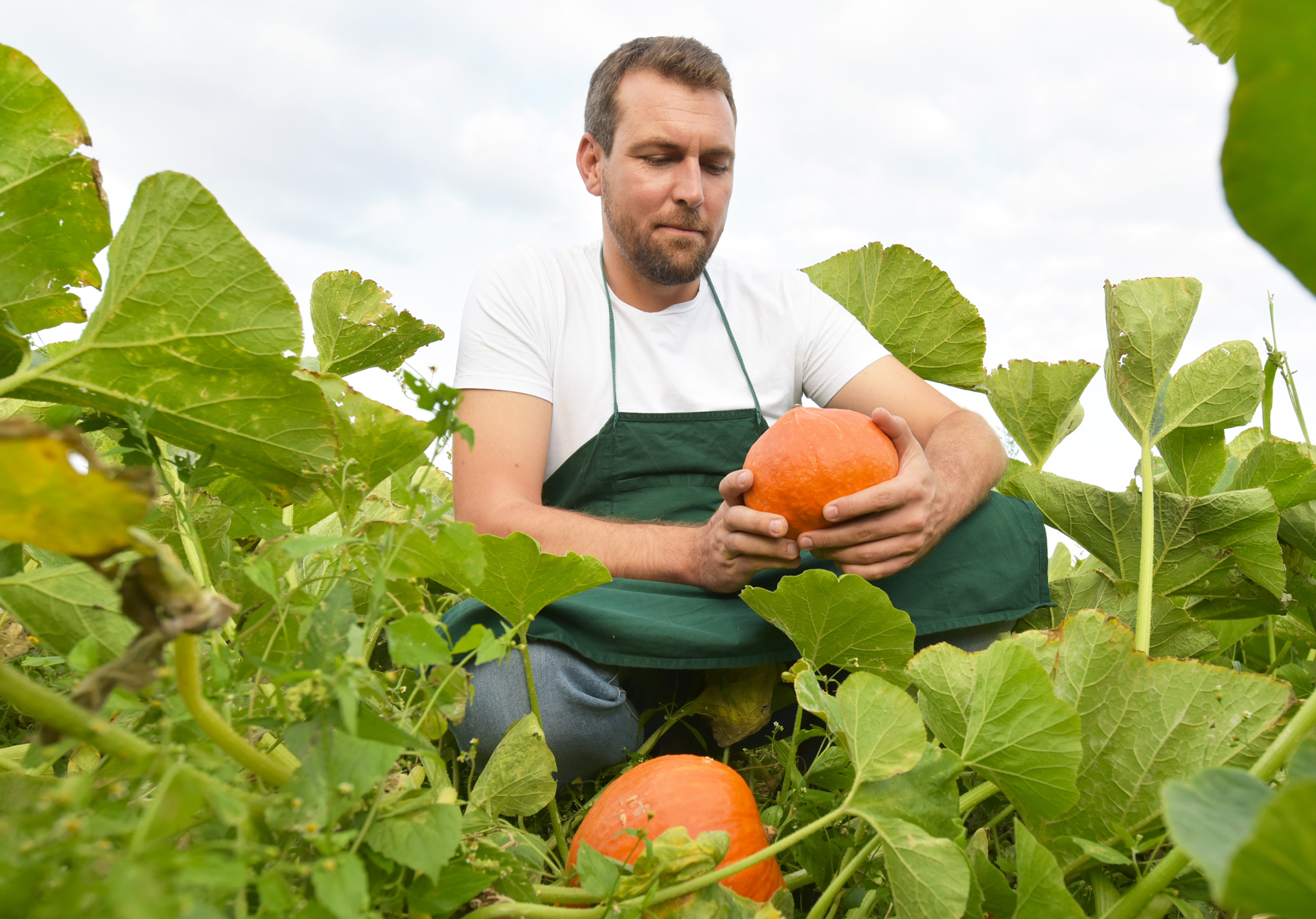
It’s Halloween already! And of all the essential symbols that characterise this time of year, the pumpkin is undoubtedly the star of the show when it comes to preparing for All Hallows’ Eve – the English contraction of this Anglo-Saxon celebration – where they are carved into faces (with eyes, a nose and a mouth) and placed on the front of American houses, a sight we’ve seen so often in films.
And where do the pumpkins set off on this adventure? Where else but in the countryside?
Their growing cycle begins in spring, when the small root balls or seeds are planted in the field, where they develop and produce fruit. They are harvested in late summer or early autumn and stored in a cool, dry place to extend their shelf life until they are needed for carving or other uses.
Spain ranks as one of the leading producers in the European Union, with Andalusia and the Valencian Community accounting for the bulk of its production. In 2018, Spain’s production stood at around 121,000 tonnes, surpassing other major producers such as France and Germany.

So what do these pumpkins need?
This crop requires meticulous care to ensure high yields and the best possible quality of the fruit. Every detail must be taken into account, so providing nutrient-rich soil or supplying nutrients via our fertigation system is essential, as the pumpkin’s requirements for fertiliser and water will increase as the fruit develops.
We need to draw up a schedule, decide when and how much to water, and put together a watering programme by monitoring the soil, the plants, or both.
Once the programme has been drawn up in line with our soil type, climate and crop variety, we must choose the appropriate irrigation system, which will enable us to apply nutrients and water efficiently. However, if we want to make the most of our water resources, drip irrigation is the answer, as it guarantees an efficiency of around 90 per cent.
Year after year, growers and cooperatives who specialise in growing the pumpkin traditionally associated with these festivities ask us for turbulent drippers capable of managing water and nutrients for their plants on plots and in sectors with relatively short branch lengths.
Which ones are turbulent? Flat or cylindrical?
Without a doubt, Lin Plus, our flat turbulent dripper, stands out as the winner in the world of cucurbits, as its versatility in terms of installation, the range of dripper spacing options available and its six flow rates make it one of the most highly recommended choices.

Furthermore, this dripper is available for RGS configurations alongside our Rootguard technology.
And you, how would you grow Cucurbita maxima?