

What is broccoli? Key characteristics
Broccoli (Brassica oleracea var. italica) is a plant belonging to the Brassicaceae family, along with cabbage, cauliflower, Brussels sprouts, …
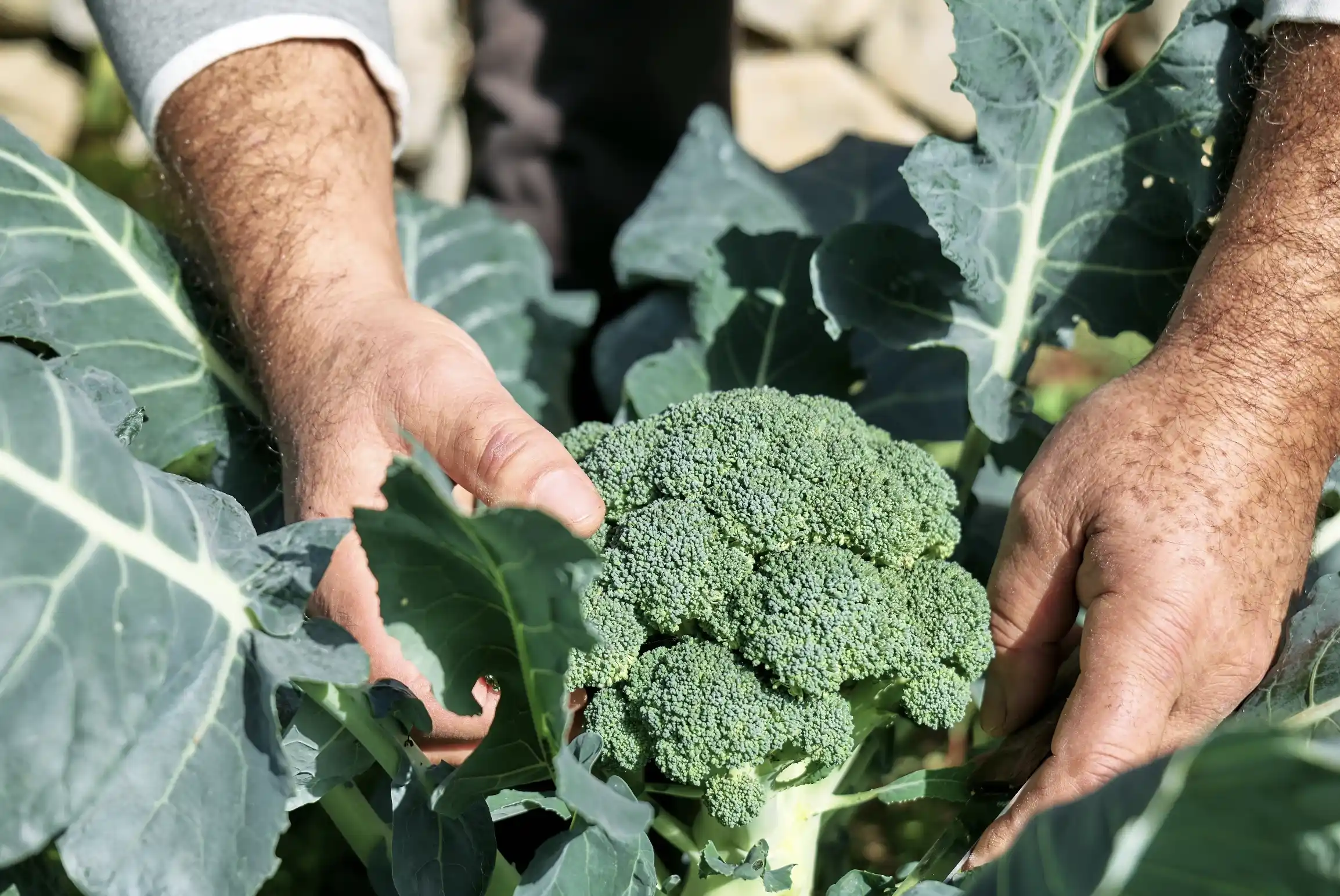
It is a plant that has many fleshy flower heads, which are the edible part. The flowers are arranged in a branched pattern, growing from a central stem surrounded by leaves.
A Superfood
From a nutritional point of view, it is rich in vitamin C and dietary fibre. It contains small amounts of selenium. It has high levels of carotenoids.
It has potential anti-cancer properties, benefits our cardiovascular system, regulates blood sugar levels, supports the digestive system and helps us maintain healthy skin.
That is why we can consider it a superfood, thanks to its nutrients and active ingredients.
Why is broccoli so important in agriculture?
Spain is Europe’s leading producer of broccoli, with a cultivation area of around 31.255 ha (almost all of which is irrigated) and an annual production of around 495,527 tonnes. Average yields stand at 15.6 tonnes per hectare.
The region with the highest production is Murcia, with 202.3 tonnes. The highest yields per area are found in the Valencian Community, at 21.5 tonnes per hectare. (2022 figures from the Ministry of Agriculture, Fisheries and Food).
These figures make it a very attractive crop for farmers from an economic point of view, particularly if it is grown intensively.
Most of the broccoli we grow in Spain is exported, mainly to the United Kingdom. Broccoli consumption in Spain is increasing year on year.
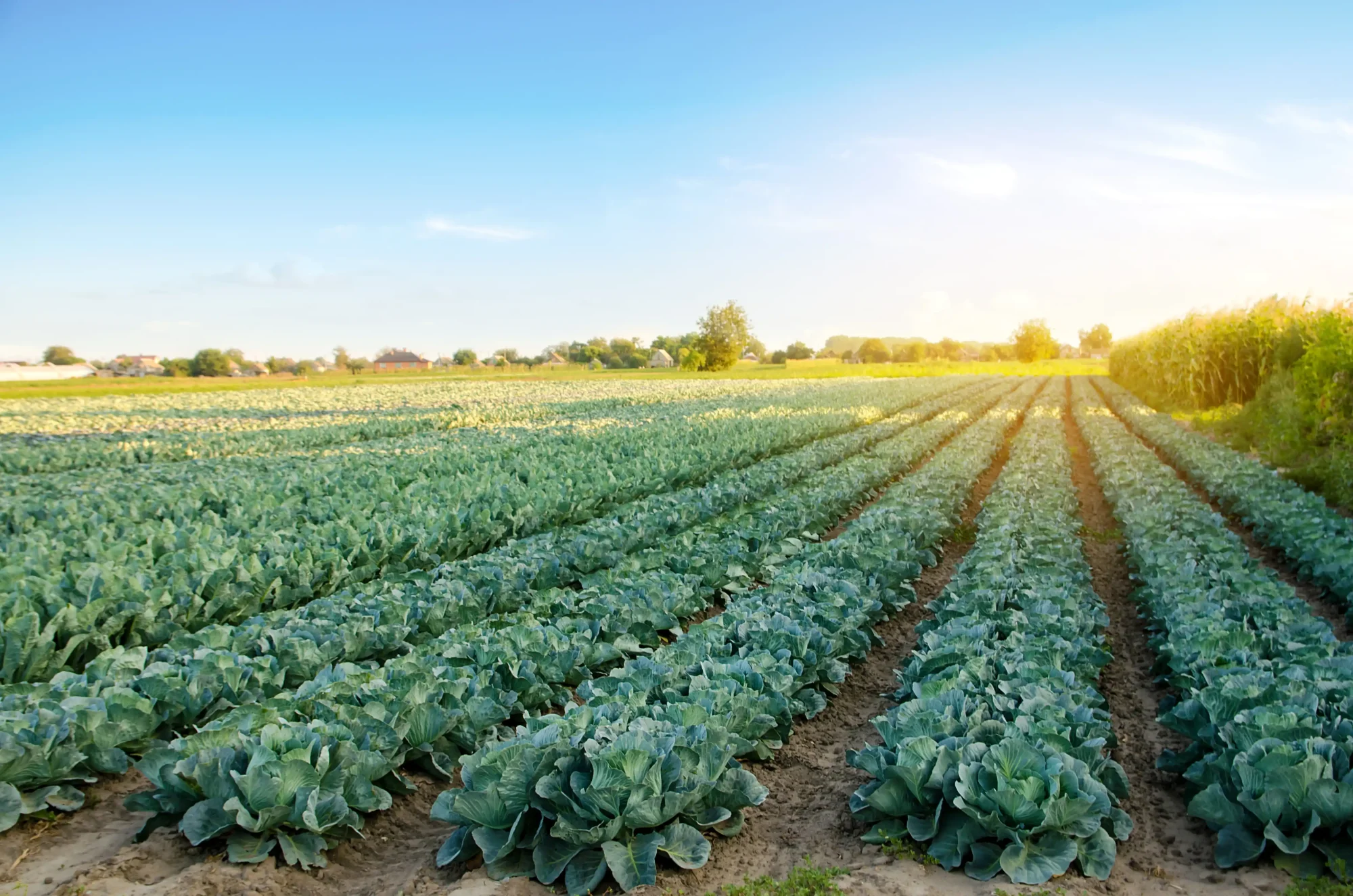
Broccoli Varieties and Harvesting
As for the varieties, there are many, but the main ones are
- Calabrian Green: this is the most commercially important variety. It is characterised by its intense green colour, with an inflorescence measuring around ten centimetres. Depending on when it is harvested, the following varieties exist:
- Varieties harvested in summer/autumn: these have a short growing cycle (around sixty days). In temperate regions, they can be grown in autumn and winter.
- Varieties harvested in winter and spring: These are long-cycle varieties (no more than 120 days).
- Verona broccoli: it is characterised by a greyish colour and a head measuring around fifteen centimetres.
- Romanesco broccoli: it is characterised mainly by its large green head, measuring between fifteen and twenty centimetres.
Stages of broccoli cultivation
The stages that the crop goes through during its life cycle are:
- Plant growth: from the time of transplanting until floral induction begins. During this phase, roots and leaves are produced.
- Flower induction occurs at the centre of the plant, forming a primary inflorescence. For this flower induction to take place, a cold treatment is required. The leaves are smaller.
- Formation of the tubers or fleshy bulbs, which are the edible part of the plant.
- Flowering.
- Fruit set from the fertilised flowers.
Germination and sowing of broccoli.
From an agronomic point of view, germination usually takes place in a seedbed over a period of around one month. The plants are transplanted into the field when they are about 20 cm tall.
There are many varieties suited to our climate and the different seasons, so it is a crop that can be grown all year round. As for temperatures, mild conditions are best for them, although they can withstand both low (never below –5 ºC) and high temperatures.
When is broccoli sown?
Planting should be carried out in such a way that, during the flowering period, the plant is not exposed to either high or low temperatures; the ideal temperature range is between 20 ºC and 24 ºC. During flower induction, the plant needs to be exposed to temperatures between 10 ºC and 15 ºC for a few hours for flowering to take place.
Fertigation of Broccoli
As regards fertilisation requirements, it has high demands for nutrients such as nitrogen, potassium and boron. In soils deficient in magnesium, it is necessary to replenish the soil with this element.
It is recommended that slow-release NPK fertilisers be applied before sowing. Take care not to over-fertilise, as this encourages leaf growth at the expense of the tubers.
Soil types suitable for growing broccoli
As for the ideal soil for broccoli, it thrives in soils with a slight degree of acidity and low alkalinity (optimum pH between 6.5 and 7). It is a crop that tolerates moderate salinity. As for soil texture, medium-textured soils are ideal, with good water-holding capacity and, very importantly, good aeration and drainage. Waterlogged soils are very detrimental to the crop.
Irrigation in broccoli cultivation
Proper irrigation management is essential for success. Broccoli requires the soil to be constantly moist, but without waterlogging. The most recommended irrigation system is localised irrigation or drip irrigation, as other systems would lead to waterlogging and the development of fungal diseases. Drip irrigation is preferable to sprinkler irrigation, as it eliminates the leaf wetness caused by sprinkler irrigation.
Water requirements
As with any other crop, the crop’s water requirements will depend on its evapotranspiration (ET = Ko × Eto). This depends on the climate (Eto) and the condition of the crop (Kc). Tables are provided by official bodies to help determine Ko based on the plant’s condition and the time of year.
It is important to use ET data calculated from weather stations near our farm, as climatic variations play a very significant role in the calculation. The table below shows the Ko value provided by the FAO.

Source: FAO – Crop evapotranspiration. Guidelines for determining crop water requirements.
Methods of watering broccoli
It should also be borne in mind with regard to watering that, during the early stages of cultivation, watering should be plentiful and carried out regularly; after flower induction, watering can be spaced out further, whilst always keeping the soil moist.
As for the frequency of watering, this is usually carried out every other day for between two and four hours, depending on weather conditions (sunlight, temperature, relative humidity and wind).
The amount of water supplied through irrigation will be the difference between the water requirements and the water provided by rainfall. We can consider broccoli to be a crop with high water requirements.
How do you plant broccoli?
Planting patterns vary depending on the area where the crop is grown. In Extremadura, it is common to plant a row of broccoli plants in beds 1.5 m wide, with a spacing of 50 cm between plants. A drip line is laid along each row of plants.
In Murcia, however, a typical planting pattern would be in ridges, with 90 cm between rows and 25 cm between plants. The most common planting densities are 40.000–45,000 plants per hectare.
Broccoli pests and care
Broccoli cultivation is affected by insects (leafhoppers) and worms (cabbage worm). Particular mention should be made of fungal diseases (black rot and downy mildew), which are exacerbated by environmental conditions.
Finally, encourage crop rotation, as it is not beneficial to grow it after a Brassica crop.
Automated Irrigation of Broccoli Using Caudal
At Caudal, we stock thin-walled drip tubing (ranging from 0.15 mm to 0.38 mm in thickness) with drippers such as the S200 and S300, which offer different flow rates (ranging from 0.7 l/h to 2 l/h). By combining wall thickness, flow rate and spacing between drippers, we can adapt to the requirements of any farmer.
Manuel Gómez Carmona
Agricultural Engineer specialising in Water Resources.