



Strawberries are a very popular fruit all over the world, and growing them in greenhouses can be an excellent alternative to other crops. In both Spain and the United States – the world’s leading producers – strawberries are important both for fresh consumption and for the food industry, where they are used to make juices, yoghurts, milkshakes, jams, preserves, tins and frozen products.
The basic steps for growing strawberries in a greenhouse are set out below:
- Choose the right variety based on the local climate conditions and the planting system. There are many varieties available on the market, some better suited to cold climates and others more heat-tolerant.
- Prepare the soil thoroughly, aerate it and enrich it with compost and/or manure. Strawberries prefer a slightly acidic pH, between 5.5 and 6.5, so it is important to test the soil’s pH beforehand using a pH meter.
- Plant strawberries in spring or autumn, depending on the variety and the climate. They should always be planted in a sunny, well-drained area, in rows with a spacing of around 35–40 cm between each plant, in well-drained beds or hydroponic substrates such as coconut fibre.
- Choosing the right irrigation system. Irrigation is a crucial factor in the cultivation of Fragaria spp., as they require an adequate water supply for optimal growth and fruit production. To keep the soil moist, regular irrigation is recommended, which can be achieved using the pulse irrigation technique. Drip irrigation systems with anti-drain emitters, such as Inbar, can significantly contribute to irrigation efficiency. The quality of the irrigation water is also a factor to consider, as it can influence plant development. Water with high salinity or high levels of heavy metals can be harmful to plant health and affect yield. Non-drainage drip irrigation systems are undoubtedly an ideal solution for multi-season crops, thereby increasing profitability and the service life of the pipework. For single- or two-season crops, we recommend using pipes with low to medium wall thicknesses, specifically our Micro Lin pipe, a product specially designed for greenhouse strawberry cultivation, thanks to its flexibility and adaptability to different irrigation systems.
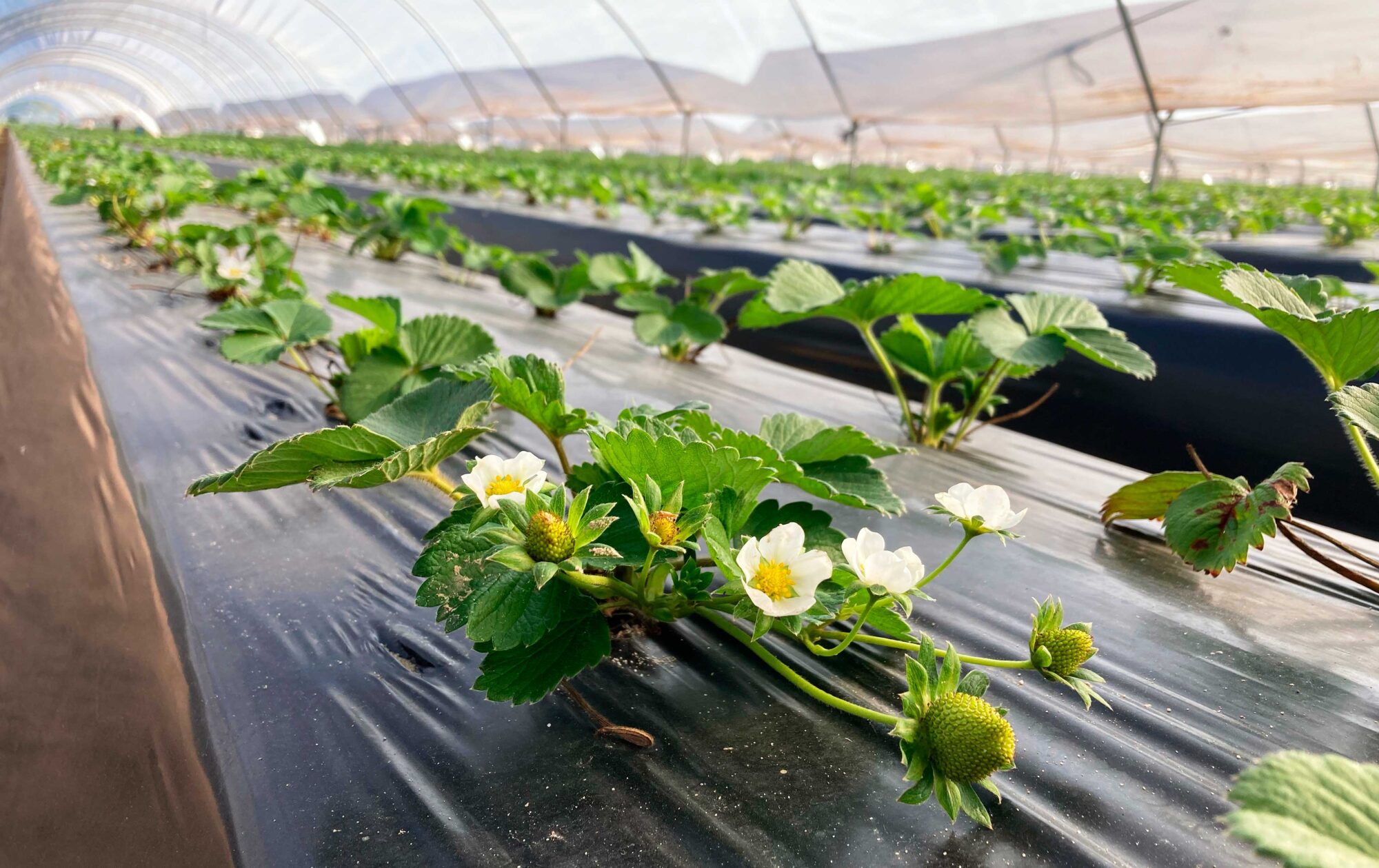
- It is important to note that strawberries are susceptible to various fungal diseases, such as downy mildew (Peronospora spp.), which can affect their growth and yield. To prevent these diseases, it is recommended to keep the leaves dry and well-ventilated, which can be achieved through good management of humidity and ventilation in the crop. To protect the plants from fungal diseases, natural or chemical fungicides can be used, but it is important to follow the manufacturer’s recommendations. In addition, it is recommended to implement integrated pest and disease management, which includes preventive measures, such as selecting resistant varieties and using appropriate cultivation practices, alongside chemical control only when necessary.
- These stolon-bearing plants are usually ready for harvest between 4 and 6 weeks after flowering; they are ripe when they are a bright red colour and feel soft to the touch. It is important to harvest them at the right time and store them in cold storage to maintain their freshness.
In short, strawberry cultivation is a very attractive option for farmers, and irrigation is a key factor in achieving healthy, high-quality produce; therefore, it is essential to carefully monitor the quantity, frequency and quality of the irrigation water to ensure optimal growing and production conditions for the plants, enabling farmers to achieve high quality and profitability.