

During the hottest months, water requirements increase and any loss of uniformity can affect the crop. That is why saving water is not just about reducing the amount supplied, but about making better use of each irrigation.
Saving water isn’t just about watering less; it’s about ensuring that every drop goes where the plant actually needs it.
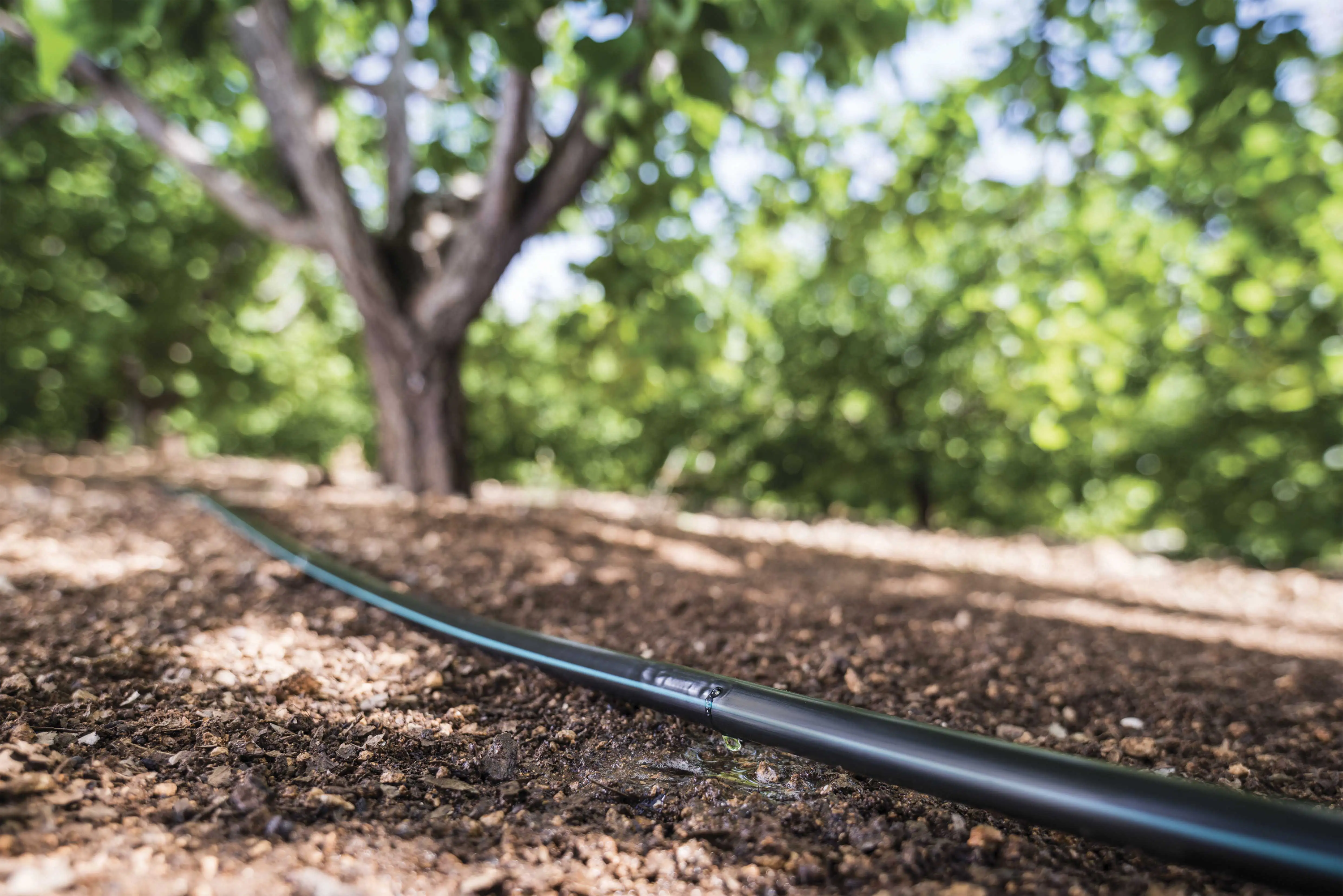
Drip irrigation allows water to be applied directly to the root zone, reducing losses through evaporation and ensuring a more precise distribution. To achieve this, it is essential to choose pipework suited to the specific characteristics of each farm.
Caudal offers a range of solutions with integrated drippers, including the PC700 range, which features self-compensating models capable of maintaining a stable flow rate despite pressure fluctuations. Some models also incorporate anti-suction systems to reduce the ingress of particles and prevent blockages in underground installations.
In addition to these features, there are technologies such as CU-PROTECT and Rootguard®, developed to enhance protection against root intrusion in underground drip irrigation systems.
Each crop, soil type and plot requires different conditions. Correctly adapting the system improves uniformity, makes better use of the available water and maintains the system’s efficiency during periods of peak water demand.