


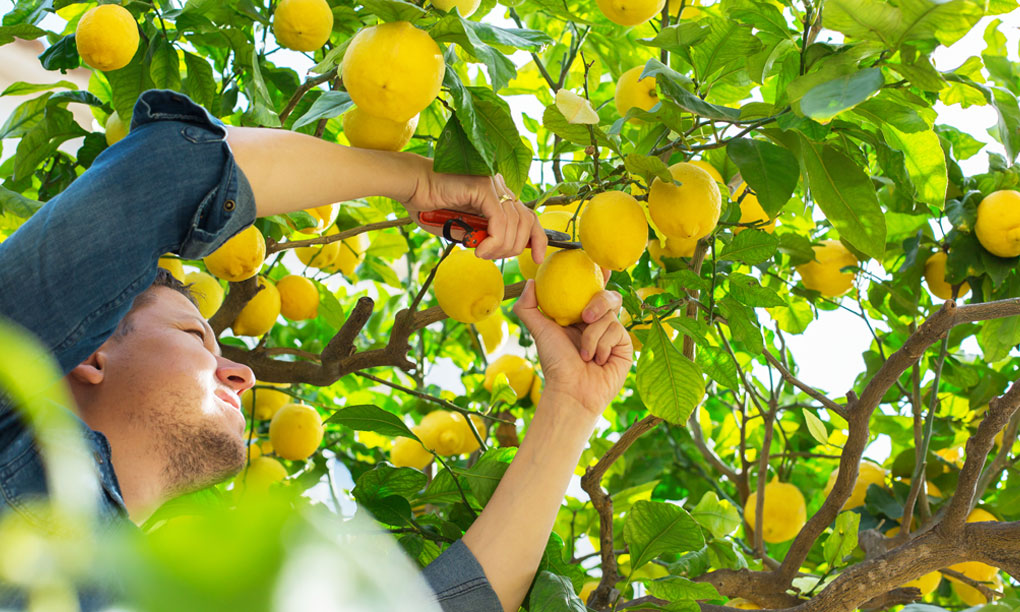
The 2021–2022 season has marked a turning point in the production and marketing of Spanish citrus fruits. It is a season that can be summed up as ‘disastrous’. Delays in the harvesting of different citrus varieties, low demand and a fall in the price per kilo, among many other factors, have led a well-established, reliable and fully professionalised sector to face truly nightmarish scenarios in which farmers are forced to leave produce on the trees outside the usual harvesting periods, giving rise to situations such as:
- Decline in fruit quality
- Tree exhaustion and reduced flowering for the next growing season
- Rising costs of plant protection products for fruit flies
That is why it is now more important than ever to come up with effective solutions for managing the upcoming season, which is sure to leave no one indifferent.
Citrus fruits, a crop widely grown throughout our eastern region, generally bear fruit between spring (phase I), summer (phase II) and autumn (phase III), depending on the variety:
Phase I – Exponential growth
Massive cell division is stimulated, leading to rapid and intense exponential growth; and although this occurs mainly in the cortex, structures such as the primordia of what will later become the juice vesicles begin to form. To this end, it is vital to control external factors such as the availability of water and nutrients through fertigation. At Caudal, we are specialists with over 25 years’ experience in the sector, providing efficient and reliable solutions for citrus irrigation. As a result, drippers such as Vered provide versatility and reliability to our system, thanks to their membrane which is highly resistant to agrochemicals and capable of delivering a constant flow rate throughout the entire branch network on large, irregularly shaped estates.
Phase II – Linear growth
Over a period of several months – and varying depending on the variety – this stage is characterised by the greatest increase in fruit volume, differing from the previous stage in that cell division ceases. This increase in size is particularly linked to the expansion of the locules, which contain the juice vesicles that will also reach their maximum volume.
Ensuring that each part of the fruit develops properly during its rapid growth phase will ensure that the fruit is of the highest quality for the subsequent ripening stage. Fruit size is closely linked to endogenous factors such as genetics, which must be complemented by nutritional and irrigation techniques that maintain or enhance the variety’s original characteristics. So much so that drip irrigation stands out as a reliable option for delivering these inputs in a timely and appropriate manner; having specific options for special situations, such as this stage of fruit development, will ensure the success of our tailored management approach, and therefore, understanding our irrigation system and how it operates will create the opportunity for a successful growing season whilst maximising savings on inputs.
For situations such as these, where efficient cost management is of the utmost importance, we have Inbar, an anti-drain dripper capable of keeping the lateral lines pressurised once irrigation has finished, ensuring that the water supply is just the right amount – necessary and as prescribed by the qualified technician. For all these reasons, Inbar is the perfect solution for growing high-value crops such as our citrus fruits.
Phase III – Maturation
During this stage, the fruit will not increase significantly in size, as variety-specific changes associated with ripening will occur, such as alterations in appearance, texture and flavour. As these changes take place, the intrinsic starch content will decrease whilst the sugar concentration increases. From this point onwards, the fruit will lose firmness due to a series of physical and chemical reactions, which will make this hesperidium much more delicate.
Periods of drought during ripening tend to accelerate fruit colouration, but they will, however, delay internal ripening (Smoyer, 1946); it is therefore advisable to carry out short, frequent waterings, without saturating the soil, in an attempt to balance both quality parameters and thus achieve an optimal outcome.