

We all know that water is an economic good – that is to say, a scarce resource – and that it must be treated as such. This assertion, which no one disputes, is contradicted in reality by many factors that jeopardise the water sustainability of the agricultural system.
Examples of this include:
- water pipes with significant leaks,
- river flooding,
- huge quantities of water that are lost to the sea,
- incorrect management of irrigation water,
- inefficient irrigation systems…
Water scarcity is a problem we face every season. Demand for water increases every year across various sectors, such as agriculture, industry and even domestic use. This growth in water demand is not matched by an increase in water supply; however, it can be addressed by optimising irrigation through the implementation of smart farming techniques. Consequently, water management in crop production – through water savings achieved by drip irrigation – enables us to reduce our carbon footprint, both in terms of crop production and water supply.
There are currently many techniques for improving this efficiency. This article will outline the five most significant ones that help to reduce water consumption; some have been in use for some time, whilst others represent innovations in agricultural irrigation.
- Drip irrigation.
There are various irrigation systems, classified according to the way in which water is applied to the soil. The main ones are:
- flood irrigation,
- furrow irrigation,
- sprinkler irrigation,
- pivot irrigation,
- micro-sprinkler irrigation
- localised irrigation.
- drip irrigation.
To begin with a general definition, irrigation is:
“The method of artificially supplying water to crops to supplement the effects of rainfall.”
This definition does not take the plant into account. We could therefore improve the definition of irrigation by adding a few further details:
“Irrigation is the artificial means of applying water to the plant’s root zone so that it can be utilised to the full by the plant itself.”
In this final definition, we introduce the plant and add an efficiency factor: the water is applied to the root zone and is utilised to the full – that is, efficiently (with minimal losses) – by the plant.
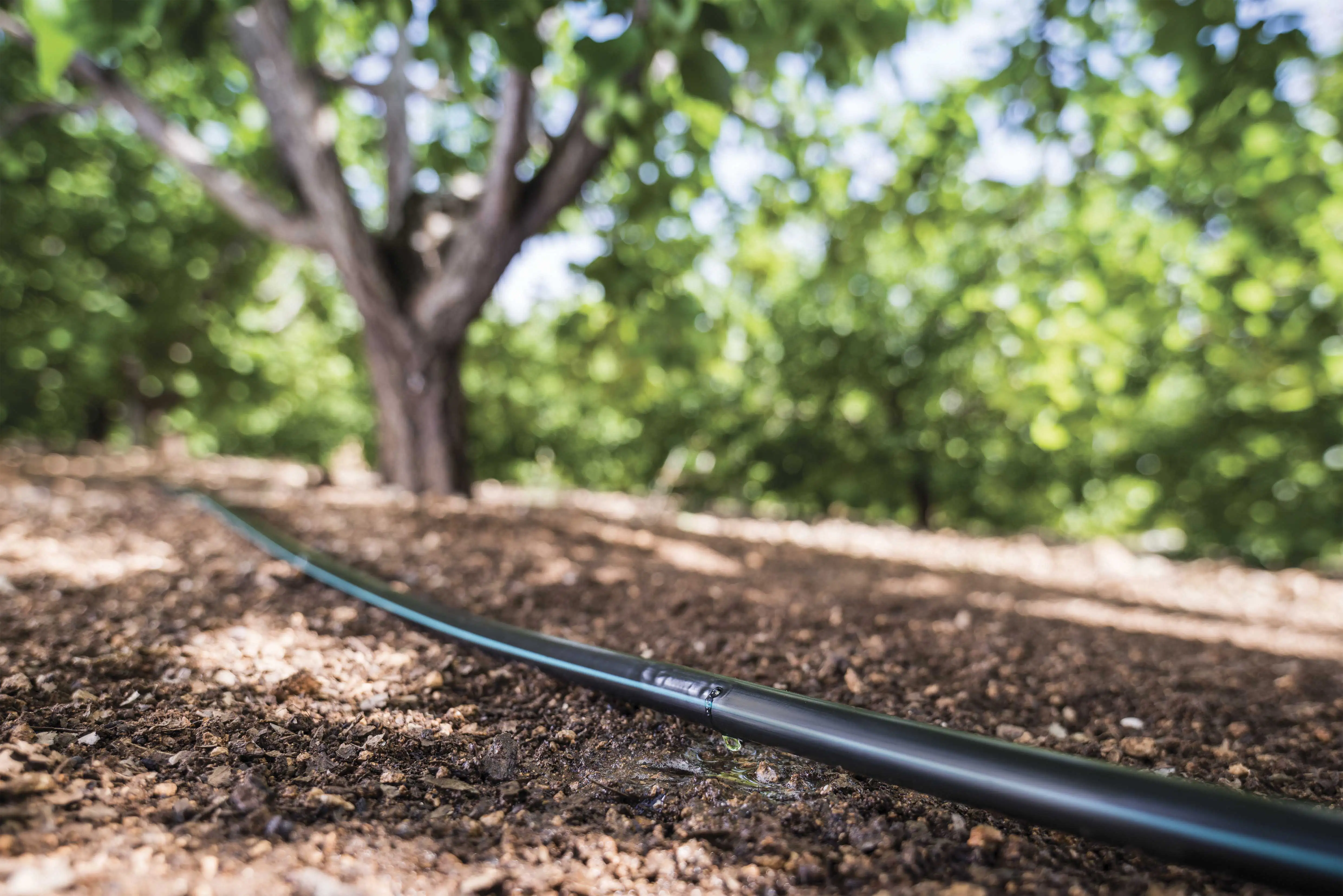
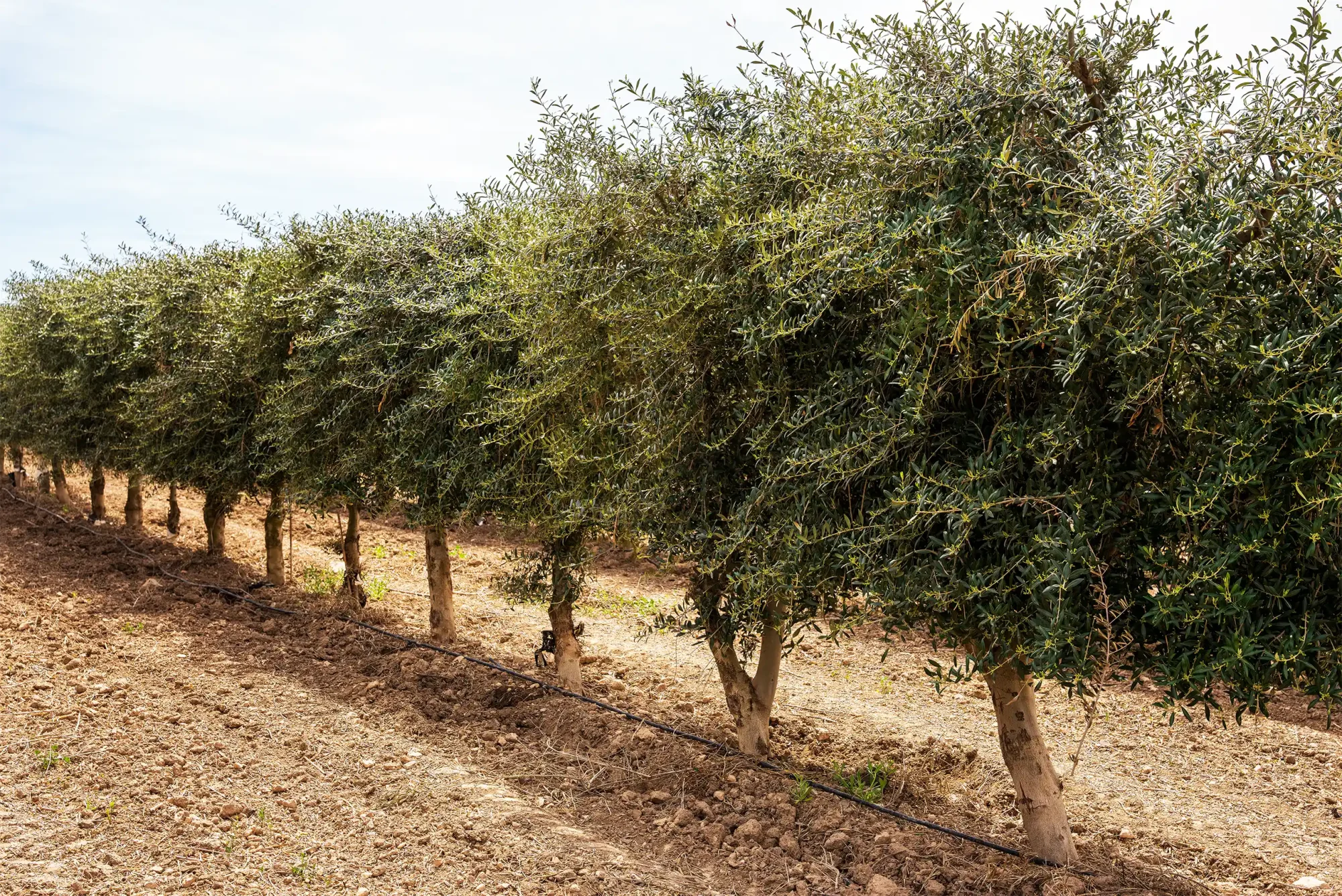
Localised or drip irrigation is a method we can use to achieve this. Let’s look for a definition of this system. We can therefore define drip irrigation as:
“A sustainable irrigation system which, through the use of pipes, fitted with devices called drippers, which release water drop by drop, manages to deliver water to a specific area of the soil (known as the root zone), where the plant’s absorbent roots (part of the root system) are concentrated.”
It should be noted that the bulb represents a very small volume of soil compared to the total soil volume. This means that we apply water to a small volume of soil, thereby greatly minimising the following losses that occur in other irrigation systems:
- Runoff: the loss of water from the soil surface due to the slope of the ground.
- Percolation: the loss of water into the ground, where it reaches layers that cannot be utilised by plants.
- Evaporation: the loss of water from the soil surface into the atmosphere; it is one of the components of evapotranspiration.
At Caudal, we offer a wide range of drip irrigation and automated drip irrigation solutions.
- Sensors to optimise irrigation.
Monitoring is the more or less continuous observation and recording of one or more variables, using sensors. Plants use the soil to obtain the water and mineral salts necessary for their growth. Understanding the condition of the soil is essential for implementing irrigation and fertilisation strategies. To this end, there are two tools available to any farmer: laboratory analyses and the use of irrigation sensors.
There are certain soil parameters whose values can vary throughout the day, and we are keen to monitor these as they fluctuate significantly: soil moisture, electrical conductivity and soil temperature. Various types of sensors are available for this purpose:
- Electrical conductivity sensors: electrical conductivity (measured in μS/cm or μS/m) indirectly indicates the amount of salts present in a medium, in this case the soil.
- Soil temperature sensors: Conductivity sensors usually incorporate a temperature sensor (measuring in °C) to compensate for the effect of temperature on the electrical conductivity reading.
- Volumetric sensors: these measure the amount of water in the soil. To be more precise, they measure the percentage of the soil’s total volume that is occupied by water.
- Water potential sensors or tensiometers: these measure the suction (negative pressure) that the root must exert to draw water from the soil. This value depends on the amount of water in the soil, the soil’s texture and the salinity of that water.
In this way, we can monitor soil moisture and the other factors that are important for improving plant productivity and growth.
- Use of satellites and drones
All bodies emit radiation. Radiation is the emission, propagation and transfer of energy in the form of electromagnetic waves and particles. By using multispectral cameras, we can detect radiation emitted by objects at different wavelengths. This radiation provides us with information, either directly or through the use of indices relating to soil moisture or plant condition.
The use of drones or satellites relies on these cameras, which record radiation from the ground and plants. However, the use of one or the other agricultural irrigation technology differs in terms of results and costs. The resolution of the data pixels from drones is much higher than that from satellites.
We decide when to collect data using drones; with satellites, it depends on how often they pass over our farm. The cost of using drones is much higher than that of satellites.
- Solar-powered drip irrigation.
Energy costs are becoming an increasingly significant component of the total costs of agricultural activity. That is why reducing or even eliminating this cost is of great interest.
The use of solar panels to power the irrigation system (which is usually the system that consumes the most electricity on the farm) is an option that many farmers are adopting.
The use of drip irrigation is essential, as it is the system that requires the least amount of water to be moved, compared with other systems (flood irrigation, sprinkler irrigation, centre-pivot irrigation, etc.).
- Advanced fertigation systems with localised irrigation.
Fertigation involves supplying the soil with the nutrients that crops need via the irrigation water. This results in savings in two ways:
- Elimination of fertiliser spreader passes using tractors.
- Reduction in the amount of fertiliser to be applied.
The environmental benefits must also be taken into account, as the fertiliser is applied directly to the bulb, enabling the plant to make the most of it, thereby increasing the efficiency of the fertilisation and reducing the potential increase in soil salinity caused by the use of excessive amounts of fertiliser. It also reduces the leaching of fertiliser-laden water, thereby preventing the salinisation of aquifers.
With fertigation, fertiliser is applied with every irrigation, meaning that slow-release fertilisers can be eliminated and higher-quality fertilisers used, as the quantities of fertiliser required are significantly reduced through the use of this technique, without increasing costs.
Manuel Gómez Carmona
Agricultural engineer from Caudal