



What is wheat cultivation?
To talk about wheat is to talk about history. This cereal has been feeding us for over 10.000 years, and the truth is that it remains one of the cornerstones of our diet. Wheat (Triticum spp.) is a rather noble annual grass, capable of adapting to different climates and soils. That said, if we want to realise its full potential, we need to pay close attention to certain aspects of agronomic management, and irrigation is undoubtedly one of the most critical.
In our country, wheat is grown on around 2 million hectares. Traditionally, we have grown it as rain-fed crops, leaving the harvest to the whims of the weather. But when we introduce efficient irrigation systems, the figures change radically: we go from average yields of 2.500–3,000 kg per hectare to yields that easily exceed 6.000–8,000 kg/ha. In other words, more than double. And this isn’t magic; it’s simply giving the crop what it needs at exactly the right time.
The wheat cycle has its own rhythm, its own stages: germination, tillering, stem elongation, heading, flowering and ripening. Each stage has different requirements in terms of water, nutrients and temperature. It is like a symphony in which every note must be played at exactly the right moment for the result to be spectacular.
Types of wheat
Not all wheat varieties are the same – far from it. Depending on what we want to use them for and where we grow them, we’ll choose one variety or another. Let me tell you about the main ones:
Soft wheat (Triticum aestivum): This is the undisputed king. It accounts for almost 95 per cent of what we grow in Spain. Its grains are softer, rich in starch, and perfect for making bread, pastries and all kinds of dough. It is the variety found in practically every bakery.
Durum wheat (Triticum durum): Here we’re on a different note. Its grains are harder, almost glassy, and contain more protein. If you like pasta, couscous or semolina, you have this wheat to thank. It’s mainly grown in Mediterranean regions, where the climate suits it perfectly.
Winter wheat: This is the most common variety round here. We sow it in the autumn, between October and November, and it needs to be exposed to cold – a process we call vernalisation – to complete its cycle properly. We then let it grow for 7–9 months until harvest. It is patient and hardy.
Spring wheat: This variety grows more quickly. It is sown between February and March, does not need the winter cold, and is ready in 4–5 months. It is less common in Spain, but is very useful in areas where winters are too harsh or when things did not go to plan in the autumn and we need a second chance.

Within these categories, there is a vast range of commercial varieties. For drip-irrigated crops, we are particularly interested in those of a short to medium stature, which form good mounds and respond superbly to nitrogen fertiliser. Choosing the right variety can make the difference between a good harvest and an excellent one.
Requirements for growing wheat
Soil requirements
Wheat is actually quite undemanding when it comes to soil. It’s not one of those fussy crops that only thrive in perfect conditions. But of course, as with everything in life, if you give it your best, it will give you its best in return.
Soil texture: Loam-clay, loam-silt or simply loam soils are ideal. Why? Because they strike that perfect balance between retaining water and draining well. Think about it: no waterlogging, nor extreme drought. You can also grow them in clayier soils, provided they don’t become waterlogged, or in sandy soils if you’re prepared to water more frequently. That said, the yield will be slightly lower.
Depth: Here we need at least 60–80 cm of loam so that the roots can develop properly. This is because the root system of wheat can reach depths of up to 150–180 cm when conditions are favourable. The deeper the roots grow, the more water and nutrients they will be able to absorb.
pH: The optimal range is between 6.0 and 7.5. It tolerates some alkalinity up to a pH of 8.0, but problems arise in acidic soils with a pH below 5.5: aluminium becomes toxic and nutrients are not absorbed properly.
Drainage: This is non-negotiable. Waterlogging, even if only temporary, can ruin the crop. The roots suffocate, fungi develop, and yields plummet. With drip irrigation, this becomes even more critical, because if the water does not drain properly, we will be creating problems where there were none before.
Salinity: Wheat copes quite well here. It can withstand conductivity levels of up to 6–8 dS/m without being unduly affected. Above these levels, however, we will begin to see losses of between 10–25 per cent. It is not the most sensitive crop, but nor is it the most resistant.
Organic matter: The higher the percentage – above 2 per cent – the better. Organic matter improves soil structure, helps retain water without causing waterlogging, and keeps all those soil microorganisms alive that work for us without us even realising it.
Climate requirements
Wheat is a crop that thrives in a temperate to cold climate, and each stage of its development has its own specific requirements. It is as if the crop were changing its character as it grows.
Temperature: When germinating, it prefers temperatures of 15–20°C, although it can actually germinate at temperatures ranging from 3 to 30°C. During tillering, it prefers cooler conditions, around 12–15°C. Winter wheat needs its dose of cold — between 0–10°C for one or two months — to develop properly afterwards. When heading and flowering begin, it favours more moderate temperatures, between 18–24°C. And for the grain to fill out, the ideal temperature is around 20–25°C. However, if temperatures exceed 30°C during flowering, we may face serious sterility issues.
Frosts: This is where winter wheat shows its mettle. During the vegetative stage, it can withstand temperatures as low as -10°C or -15°C without batting an eyelid. But when it is heading or flowering, temperatures as low as -2°C are enough to cause concern: the flowers are damaged and we lose grains per ear.
Rainfall: Although rain-fed wheat can survive on 400–600 mm per year, if we want bountiful harvests we need between 500 and 700 mm, evenly distributed throughout the year. The critical period runs from stem elongation to grain filling; this is when the crop requires the most water.
Hours of light: Wheat requires between 1.000 and 1.500 hours of light throughout its entire cycle. A suitable photoperiod promotes tillering and ensures that the ears develop properly.
Relative humidity: It is best to keep it between 60–70 per cent. If it is too humid, this can lead to fungal diseases — rust, septoria, fusarium. If the environment is too dry, pollination may be compromised.
Hydrological requirements
Efficient water management is essential for maximising wheat yields, particularly in irrigated systems:
Total water requirements: Irrigated wheat cultivation requires between 450 and 600 mm of water throughout its entire cycle, depending on climatic conditions, the variety and the irrigation system. In drip irrigation systems, water requirements can be reduced by 20–30 per cent compared with sprinkler or flood irrigation due to greater efficiency.
Crop coefficient (Kc): Kc varies according to the phenological stage: initial (sowing–tillering) 0.3–0.5; development (tillering–stem elongation) 0.7–1.0; middle (stem elongation–heading) 1.05–1.20; final (maturation) 0.4–0.6. The period of peak water demand occurs from stem elongation until the start of grain filling.
Critical irrigation stages: There are certain phenological stages at which water deficit severely affects yield: during tillering, adequate irrigation promotes the formation of productive stems; during stem elongation and ear emergence, water stress reduces the number of spikelets per ear; during flowering, a lack of water causes floral sterility; and during grain filling, it determines the final grain weight.
Irrigation frequency and rate: With drip irrigation, it is recommended to maintain soil moisture at 70–80 per cent of field capacity during critical stages. Typical application rates range from 15–25 mm per irrigation, with irrigation intervals of 5–10 days depending on weather conditions. During grain filling, it is crucial to maintain consistent but moderate irrigation.
Water quality: Wheat tolerates water with an electrical conductivity of up to 4–6 dS/m without any significant reduction in yield. The pH of the water should be between 6.5 and 8.0. It is important to avoid irrigating with very cold water during sensitive growth stages.
How is wheat grown?
How to sow
A good start is half the battle. After all, if germination is uneven or the seedlings emerge weak, everything we do afterwards will be an uphill struggle.
Soil preparation: The first step is deep tillage to a depth of around 25–30 cm to break up the hard layers that restrict root growth. We then run a cultivator or harrow over the soil to leave it loose and crumbly. If we are going to use buried drip irrigation, the drip lines are laid at a depth of 15–20 cm and installed before sowing. If we prefer surface drip tape, we lay this out and remove it each growing season.
Sowing method: We can use a traditional row seeder, leaving 15–20 cm between rows, or a precision seeder if we want greater control. With drip irrigation, a bit of thought is required: the seed rows should be close to where the water falls, usually about 10–15 cm from the edge. This ensures the roots find moisture right from the start.
Sowing rate: In irrigated conditions, we use between 180–220 kg per hectare for long-cycle varieties, and between 220–250 kg/ha for short-cycle varieties. That works out at around 400–450 viable seeds per square metre. Of course, this needs to be adjusted according to the thousand-grain weight of our variety, its germination rate, and the conditions on the day of sowing.
Sowing depth: The ideal depth is between 3 and 5 cm. If you sow them too shallowly, the seeds will be exposed to the sun and birds. If you sow them too deeply, the poor seedling will take a long time to emerge and will be weak.
Seed treatment: We always use certified and treated seed. Fungicides prevent smut, seed rot and seedling blight. We can also add insecticides to combat soil-borne pests and biostimulants to ensure strong root development.

When to sow
Timing is everything. Sowing too early or too late can cost us hundreds of kilos per hectare.
Winter wheat: In most of Spain, we sow between late October and mid-December. However, this varies considerably depending on the location: in the colder inland areas —Castile and León, Aragon— it is best to sow between late October and mid-November. In contrast, in milder areas such as the Guadalquivir Valley or the Levante region, we can safely wait until December.
Spring wheat: This is sown between February and March, when the weather starts to warm up and severe frosts are less likely. It is not very common in Spain, but it is a lifesaver in areas with extremely harsh winters or when the autumn sowing has gone wrong and we need a second chance.
Factors to consider: The ideal date depends on several things. The soil must be at least 8–10°C for germination to proceed successfully. We need sufficient moisture or the ability to water immediately. Early sowings are more prone to weeds and diseases. The variety we choose also plays a part — whether it is a long- or short-cycle variety — as does whether we are farming on rain-fed or irrigated land. With irrigation, we have more flexibility when it comes to choosing dates.
Late sowing: Sometimes circumstances force us to sow late, even though we know we will lose 10–20 per cent of our yield potential. In such cases, we need to compensate: we increase the sowing rate by 15–20 per cent and choose varieties with a shorter growing season. It’s not ideal, but at least we save the season.
When to water
Water at just the right time is worth its weight in gold. Giving it to the wheat when it doesn’t need it is a waste of money and resources. Not giving it when it needs it means losing the harvest. Let’s look at it stage by stage:
Pre-sowing or emergence irrigation: If autumn is dry, a pre-sowing irrigation of 60–80 mm ensures that the soil profile retains moisture and that emergence is uniform. If this has not been done previously and the soil is dry, a light irrigation of 20–30 mm immediately after sowing is essential.
Tillering stage (November–February): If rainfall is normal, we don’t usually need to water here. But if it’s dry, a supplementary watering of 30–40 mm helps to form more productive tillers. Be careful not to overdo it: too much water causes the crop to grow excessively and then lodge.
Tillering stage (March–April): This is when the crop really starts to need water. We maintain soil moisture at 70–80 per cent of field capacity with irrigations of 40–50 mm every 10–15 days. If we fall short, the number of spikelets per ear suffers, and that means a loss of yield.
Earing–flowering stage (April–May): This is the most critical period. A lack of water at this stage can ruin the harvest. We maintain constant soil moisture with frequent waterings of 30–40 mm every 7–10 days. If using drip irrigation, it is better to water more frequently but in smaller amounts: 15–20 mm every 5–7 days. Any stress during flowering causes sterility and we lose grains.
Grain-filling stage (May–June): This is when we determine how much our grains will weigh. Irrigate with 35–45 mm every 7–12 days, maintaining moderate moisture levels. Neither too much nor too little. Excess moisture encourages disease and impairs baking quality. We stop watering about 15–20 days before harvest, when the grain has a moisture content of 30–35 per cent, so that it dries out and hardens properly.
Irrigation management: Let’s not just wing it. Let’s use soil moisture probes, tensiometers or a weather station to work out how much water the crop is losing. With drip irrigation, we can also add nutrients with each irrigation, tailored to the wheat’s needs at any given time.
Wheat treatments and harvesting
Fertilisers – fertigation
If we want to get the most out of our wheat, nutrition is key. It’s not enough just to water it properly; you have to feed it at the right time.
Nutritional requirements: To produce 6.000–7,000 kg of grain per hectare, wheat removes approximately the following from the soil: 180–200 kg/ha of nitrogen, 80–100 kg/ha of phosphorus, 160–200 kg/ha of potassium, 40–60 kg/ha of calcium, 20–30 kg/ha of magnesium, and micronutrients such as zinc, manganese, iron, copper and boron. These must be returned to the soil.
Basal fertilisation: Before sowing, we apply all the phosphorus and potassium, plus 20–30 per cent of the nitrogen. Typical rates are around 80–100 kg/ha of P₂O₅, 100–120 kg/ha of K₂O, and 40–60 kg/ha of N. We use superphosphate, MAP and DAP for phosphorus; potassium chloride or sulphate for potassium; and urea or ammonium sulphate for that initial application of nitrogen.
Nitrogen fertigation: The remaining nitrogen — around 120–140 kg/ha — is applied in split doses via fertigation at key stages. During tillering, 20–30 kg/ha of N is applied to encourage the formation of more stems. At the stem elongation stage, 40–50 kg/ha to increase the number of spikelets. At the start of ear emergence, a further 40–50 kg/ha to achieve more grains per ear. And during grain filling, a further 20–30 kg/ha to improve the protein content of the grain.
Fertilisers for fertigation: The most commonly used are calcium ammonium nitrate (27% N), potassium nitrate (13-0-46), urea (46% N, although the water must be acidified), MAP and MKP when phosphorus is required, and soluble potassium sulphate for potassium.
Micronutrients: In alkaline or nutrient-poor soils, deficiencies in zinc, manganese or iron may occur. These are applied via fertigation using chelates or via foliar application. Boron is particularly important during flowering as it affects pollen viability.
Controlling pH and EC: In fertigation, maintaining the water’s pH between 5.5 and 6.5 helps the nutrients to dissolve more effectively. It is also important to monitor electrical conductivity to prevent soil salinisation, particularly if drainage is poor.
Types of pests and treatments
Wheat has its enemies, just like any other crop. The important thing is to recognise them and take action only when it is really necessary, not before.
Aphids: These are the most common and problematic pests. They appear from the stem elongation stage right through to grain filling. They suck the sap and also transmit viruses such as the yellow dwarf virus, which can be devastating. The treatment threshold is 10–15 aphids per ear during ear emergence. We use imidacloprid, pirimicarb or lambda-cyhalothrin. A tip: treating the seed with systemic insecticides protects us during the early stages.
Zabro: The larvae of this beetle feed on the leaves during the winter and spring. They can leave bare patches in the crop. If we spot the first signs of damage in the autumn, we apply chlorpyrifos or lambda-cyhalothrin.
Wheat midge: The larva burrows into the stem and weakens it from the inside until it breaks. If you have had problems in previous growing seasons, it is best to take preventative action with seed treatment or an early foliar spray.
Thrips: These tiny insects appear during the ear emergence and grain-filling stages; they discolour the grains and leave them half-empty. If there are more than 5–10 thrips per ear, treatment with deltamethrin or lambda-cyhalothrin is required.
Black weevil: In warm areas, it can cause problems. The larvae feed on leaves and young ears. We treat with chlorpyrifos, lambda-cyhalothrin or Bacillus thuringiensis whilst the larvae are still small.
Integrated pest management: The key is not to rely solely on chemicals. We rotate crops to break the pest cycle, remove weeds that provide them with shelter, we use resistant varieties where possible, we treat seed preventatively, we monitor the crop regularly using traps and visual inspections, we adhere to treatment thresholds to avoid unnecessary expenditure, and we alternate active ingredients to prevent resistance from developing.
Wheat harvest
Harvest time is the moment of truth. After months of tending the crop, it must be harvested at exactly the right time so as not to compromise either yield or quality.
Harvest time: We harvest when the grain is hard, does not dent when pressed with a fingernail, and has a moisture content of between 13–16 per cent. If we harvest when the moisture content is over 16 per cent, we will have to dry it afterwards, and that costs money. If the moisture content falls below 12 per cent, the grain shatters easily and we lose some of the crop during harvesting.
Harvest calendar: In Spain, we harvest between June and July, although the dates vary considerably depending on the region. In Andalusia and the hot southern regions, from late May to mid-June. On the northern plateau —Castile and León— from late June to mid-July. And in mountainous areas, until late July or early August.
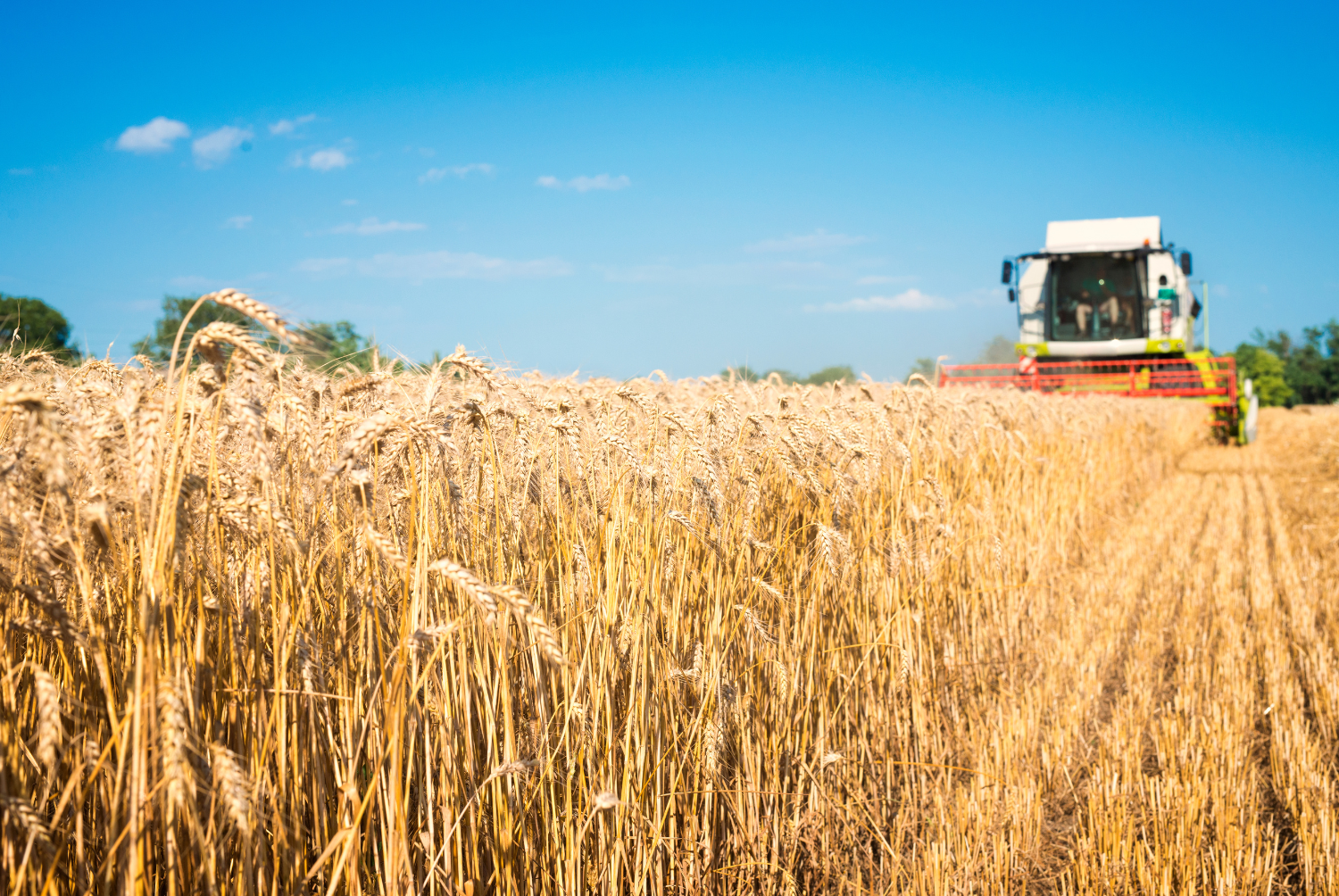
Indicators of ripeness: We will know it is ready when the crop has that characteristic golden-yellow colour, the grain is hard as a rock, the moisture content is around 13–16 per cent, the straw is dry and breaks easily, and the leaves are completely dry.
Combine settings: Each machine has its own optimal settings, but as a guide: forward speed of 5–7 km/h under normal conditions, threshing drum at 800–1,000 rpm, concave gap of 12–18 mm (adjusted according to moisture content), fan speed set to clean the grain without losing any, and sieves with the upper one at 16–18 mm and the lower one at 8–10 mm.
Acceptable losses: Total losses should not exceed 3 per cent: less than 1 per cent during cutting, less than 2 per cent during threshing and separation, and less than 0.5 per cent during cleaning. If losses are higher, the settings need to be checked.
Best time of day: It is best to harvest when the grain is dry but the straw is still somewhat flexible. The late morning or early afternoon is usually ideal. We avoid harvesting when there is dew or after rain.
Expected yields: In irrigated crops with well-managed drip irrigation, yields of 6.000–8,000 kg per hectare can be achieved. Under optimal conditions and with high-yielding varieties, yields of up to 9.000–10,000 kg/ha are possible. In rain-fed conditions, typical yields are around 2.000–3,500 kg/ha. The difference is enormous.
Grain quality: The parameters considered by flour mills include: a minimum hectolitre weight of 78–80 kg/hl for bread-making wheat, a minimum protein content of 11–13 per cent, a maximum moisture content of 14 per cent to ensure good storage, a maximum impurity content of 2 per cent, and a maximum of 5–8 per cent of sprouted, broken or damaged grains.
Irrigation products for wheat
At Caudal, we have been helping cereal farmers transform their farms with efficient irrigation systems for years. Drip irrigation for wheat is no longer the stuff of science fiction; it is a profitable reality.
Underground drip irrigation systems: This is the preferred option for extensive crops such as wheat. Pipes fitted with drippers are buried at a depth of 15–25 cm, with lateral pipes every 1.5–2 metres and drippers every 30–50 cm, each releasing 1–2 litres per hour. The advantages? We reduce water consumption by 25–35 per cent compared with sprinkler irrigation, achieve over 90 per cent uniformity, eliminate evaporation losses, there are fewer weeds because we do not wet the entire surface, we can apply fertiliser with surgical precision, and the system lasts 10–15 years with simple maintenance.
Surface drip tapes: If you don’t want to make such a large initial investment, surface drip tapes are a good alternative. They are laid on the surface during the growing season and collected after harvest. Ideal for those who rotate wheat with other crops or want to try out drip irrigation before making the definitive switch.
Filtration systems: We cannot cut corners here. Clogged drippers can ruin the harvest. We offer ring filters for clean water, mesh filters for water containing suspended particles, sand filters for water containing organic matter or algae, and automatic backwash filtration systems that clean themselves.
Fertigation heads: This is where the magic happens. They allow fertilisers to be injected with millimetre precision. They include fertiliser tanks with agitators, various types of injection pumps, systems for monitoring pH and conductivity, controllers for dispensing exactly the right amount, and flow and pressure gauges.
Control and automation equipment: Technology at the service of farmers. Multi-zone irrigation controllers, soil moisture sensors that tell us exactly when to water, connected weather stations that calculate how much water crops lose, solenoid valves and pressure regulators, and remote control systems to manage everything from your mobile. Because your time is valuable too.
Pipes and fittings: We supply everything you need: main and secondary pipes, drip-line pipes with UV protection and root barrier, all types of connectors, air vents to remove air from the system, drain valves at low points, and pressure gauges to monitor the pressure.
Advantages of drip irrigation for wheat: The figures speak for themselves. A 100–150 per cent increase in yield compared to rain-fed farming, water savings of 30–40 per cent compared to sprinkler irrigation, better plant protection as the foliage remains dry, precise stage-by-stage fertigation, reduced energy costs, less leaching and groundwater contamination, works on irregular and sloping plots, and the investment pays for itself in 4–6 years. After that, it’s all profit.
Technical support: We don’t just leave you to get on with the system. Our team of agricultural engineers offers you: a bespoke design tailored to your plot, calculation of requirements and irrigation scheduling, fertigation recommendations based on soil analysis, comprehensive training in operation and maintenance, technical support and spare parts always available, and ongoing monitoring throughout the growing season to optimise results. Because what matters to us is that your investment is a success.
Frequently Asked Questions about Wheat
When is wheat sown?
It depends on the type of wheat you grow. Winter wheat, which is the most common in Spain, is sown between late October and mid-December. In cold inland areas, such as Castile and León, it is best to sow earlier, between late October and mid-November. In contrast, in milder southern areas, you can wait until December without any problem. Spring wheat is sown between February and March. The important thing is that the soil is at least 8–10°C for it to germinate properly.
How much water does a wheat crop need?
Irrigated wheat requires between 450 and 600 mm of water throughout its entire growth cycle. This varies depending on the climate and your irrigation methods. The advantage of drip irrigation is that you can reduce these requirements by 20–30 per cent compared with other systems, as you make better use of every drop. The periods when the crop requires the most water are from March to June: stem elongation, ear emergence, flowering and grain filling. During these stages, it is crucial to maintain soil moisture at 70–80 per cent of its capacity to achieve maximum yield.
What is the best type of irrigation for wheat?
Without a doubt, underground drip irrigation. It is by far the most efficient. You save between 25–35 per cent on water compared to sprinkler irrigation, the water is distributed more evenly, you can apply fertiliser with precision, the foliage stays dry which reduces disease, there are fewer weeds, and you use less energy. Yes, the initial investment is higher, but it pays for itself in 4–6 years. And after that, thanks to the savings on water, energy and fertilisers, and above all the increase of more than 150 per cent in yield compared with rain-fed farming, it’s all profit.
When is the wheat harvested?
When the grain is hard and has a moisture content of between 13–16 per cent. In Spain, this is usually between June and July, although it varies depending on where you are. In the south, from late May. On the northern plateau, from late June to mid-July. In mountainous areas, this can last until the end of July. The visual signs are clear: the crop has that beautiful golden colour, you cannot leave a mark on the grain with your fingernail, and the straw is completely dry. Harvesting at exactly the right moment makes the difference between a good harvest and an excellent one.