



What is melon cultivation?
The melon (Cucumis melo) is a member of the Cucurbitaceae family and is widely grown by farmers around the world due to high demand in domestic and international markets. This plant is prized for its sweet flavour, high water content and nutritional value. Its production requires rigorous agronomic planning and the implementation of a precise irrigation system to ensure a high-quality melon.
Melon Varieties
- Cantaloupe: a round fruit with orange flesh and a rough, netted skin.
- Galia: a hybrid variety. It has a netted skin, green flesh, and is aromatic and very sweet.
- Sapo melon: widely grown in Spain, with green, rough, mottled skin and white, very sweet flesh.
- Honeydew (white melon): smooth-skinned with light green or cream-coloured flesh, a sweet flavour and firm flesh.
- Yellow: it has shiny, yellow skin and white flesh.
The choice of grape variety will depend on agronomic, commercial, climatic and logistical factors.
Grafted plants can be used in melon cultivation, although their use is not as widespread as in other crops such as tomatoes, watermelons or cucumbers. However, under certain conditions and in certain areas, grafting is a technique that is increasingly being used due to the agronomic benefits it offers. Its use is recommended in soils with health issues, those that are agronomically problematic (saline, with poor structure, etc.) or in greenhouses.
The total area under cultivation worldwide is 1.1 million hectares, with an annual production of around 28 million tonnes. The main producing countries are China, Turkey and Iran. Spain ranks eighth, with an annual production of around 900,000 tonnes from an area of around 20.000 hectares. The main producing region is Castilla-La Mancha, followed by Murcia and Andalusia.
Requirements for growing melons
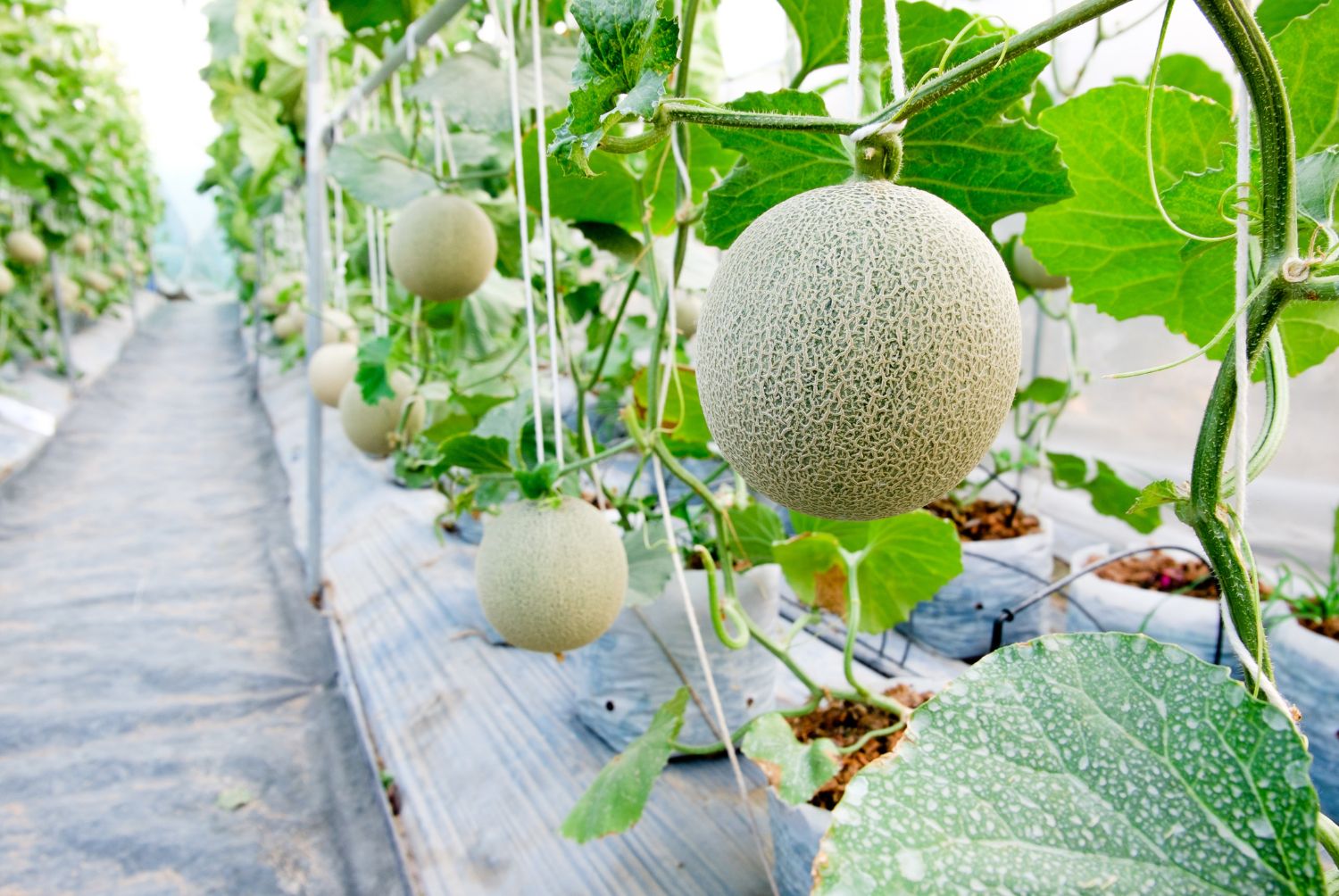
Melons can be grown in the open field or in a greenhouse. In both cases, success will depend on key factors relating to the soil, climate and water availability.
Soil requirements
Melons require well-drained, light to loamy-sandy soils with a pH of between 6 and 7.5. Excessive salt levels should be avoided, with electrical conductivity below 2.5 dS/m, as salinity affects root development. It is highly recommended to add compost or organic matter, as this improves water and nutrient retention.
Climate requirements
This crop is sensitive to low temperatures. The optimum growth range is 22 to 30 °C, with high solar radiation and relatively low relative humidity. Temperatures above 35 degrees cause heat stress. During ripening, high temperatures are required for sugars to accumulate. A significant day-night temperature range (of around 10 °C) promotes sugar production. High humidity favours the development of fungal diseases, whilst low humidity causes problems with fruit set. Rain during flowering and ripening causes problems.
This is why greenhouse cultivation is so appealing, as climatic factors can be controlled more easily, thereby extending the growing cycle and improving uniformity.
Water requirements.
Watering melons must be precise. They are very sensitive to both water deficiency and excess. During fruit set and fruit development, water requirements increase considerably.
The water requirements of melons vary depending on the type of cultivation (open field or greenhouse), the phenological stage, the climate and agronomic management.
Melons are sensitive to excess water, particularly during flowering and ripening.
A controlled delay in ripening (mild water stress) improves the sugar content (°Brix).
Localised drip irrigation is the most recommended system.
Water requirements by type of plantation
Open field:
- Total water requirement: Approximately 400 to 600 mm per cycle, depending on the climate and soil type.
Greenhouse:
- Total water requirement: Between 250 and 450 mm per cycle; that is, less water than in open fields because the more controlled climate reduces evapotranspiration (mainly due to reduced wind). Another factor that reduces water consumption in greenhouses is the more efficient use of drip irrigation.
Common irrigation methods:
- Drip irrigation with automated fertigation.
- In some greenhouses, the soil is replaced by inert growing media (rock wool, perlite, coconut fibre).
How are melons grown?
How to sow it.
Melons can be planted in various ways, and the method varies depending on whether they are grown in open fields or greenhouses, the local climate, the variety and the cultivation system.
You can either direct-sow or transplant seedlings (the most common method). Direct sowing is not recommended in cold climates. Transplanting is carried out when the plant has between 2 and 4 true leaves.
Planting frames will depend on the type of plant:
- Toadskin, Galia and yellow:
- Spacing: 1.5 m between rows and 0.4 to 0.6 m between plants.
- Planting density: 10.000 to 16.000 plants per hectare.
- Cantaloupe and small melons:
- Spacing: 1 to 1.2 m between rows and 0.4 to 0.5 m between plants
- Planting density: 16.000 to 25.000 plants per hectare.
When to sow
Melons are sown in spring, when the soil temperature exceeds 15 °C, always taking care to avoid frost. In Spain, sowing takes place:
- Outdoors: from mid-February to June, depending on the area
- Greenhouse: from mid-December to March.
When to water
Drip irrigation should begin after sowing and be maintained on a regular basis. The most critical time for irrigation is during flowering and fruit development. Over-watering during the latter stage can affect sugar levels.
Open field:
- Watering frequency:
- Initial (germination and establishment): every 2–3 days.
- Vegetative growth: every 3–4 days.
- Flowering and fruit set: every 2–3 days (critical phase).
- Fruit development: every 2–4 days.
- Ripening: every 4–6 days. Reduce watering to improve quality (sugar content).
Greenhouses:
- Watering frequency:
- More frequently, but with smaller amounts of water (several times a day, depending on the growing medium and the weather).
- Monitoring using soil moisture sensors and tensiometers.
Fertilisers – fertigation
Fertigation in melon cultivation allows nutrients to be applied efficiently alongside irrigation water. During the vegetative stage, nitrogen is prioritised; during flowering, this is balanced with phosphorus; and during fruit set, potassium is increased. The use of automated fertiliser injection systems improves the precision of fertiliser application.
Types of pests and treatments
The main pests include whitefly, thrips, aphids and mites. Diseases such as powdery mildew, downy mildew and fusarium also affect the crop. An integrated management approach is recommended, combining:
- Hardy varieties
- Colour traps
- Bioinsecticides
- Crop rotation
Harvesting melons
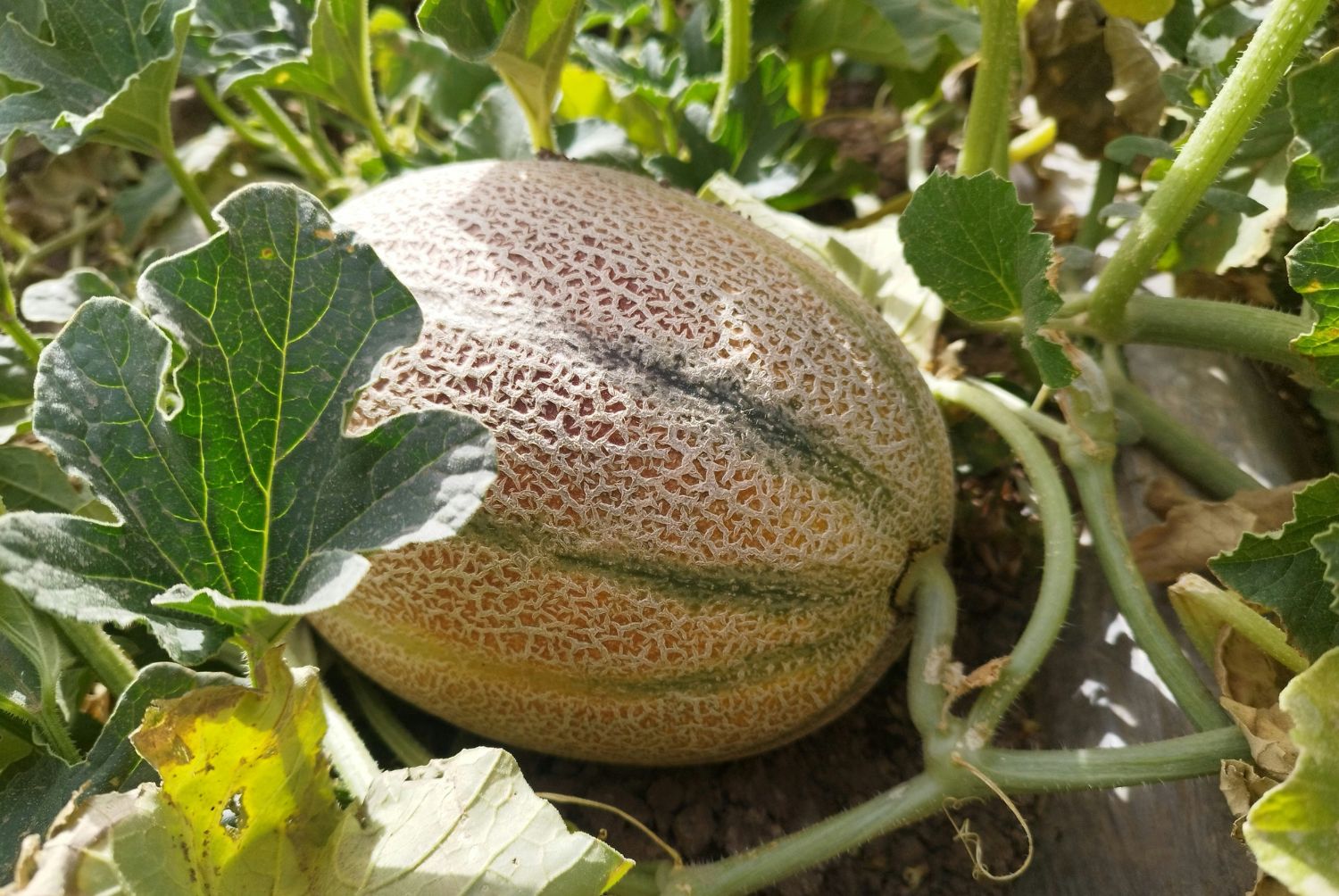
Harvesting should take place when the fruit has reached physiological maturity, which can be determined by a number of factors: skin colour, a strong aroma, easy detachment from the stalk, the formation of a net-like pattern on melons with reticulated skin and, most importantly, an optimal Brix sugar content.
It is recommended that this be done during the cooler hours of the day, taking care to avoid damaging the fruit and to ensure it keeps well.
Irrigation products for melons
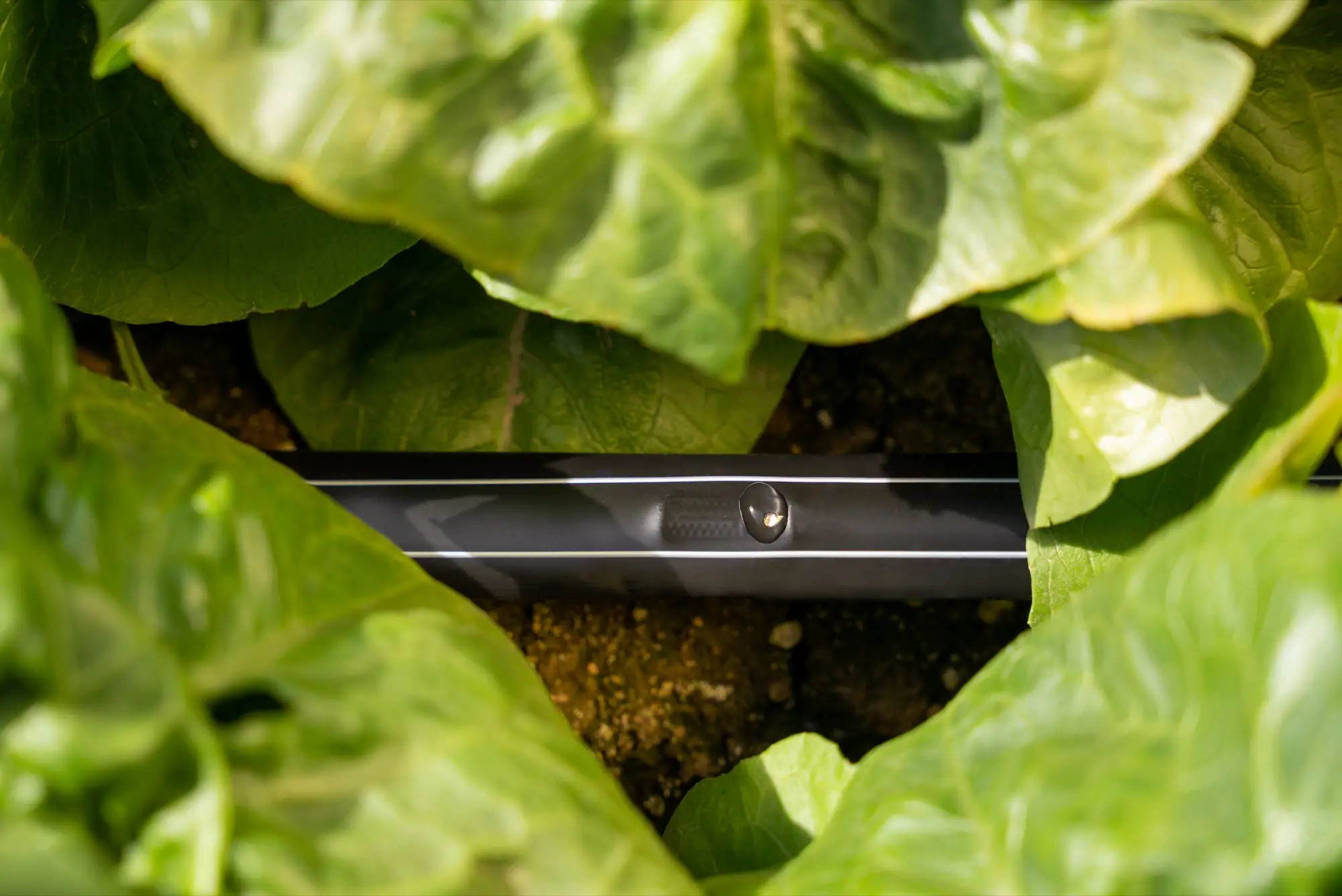
To achieve an efficient irrigation system, it is essential to have:
- Drip tape with a minimum thickness of 8 mil (0.2 mm), fitted with drippers delivering around 1 l/h and spaced 20 cm apart. This creates a moist strip in the soil that provides the necessary water for the crop. At Caudal, we have a tape with these specifications: the S200, which is widely used in the market, with millions of metres installed every year, supplying water to millions of watermelons.
- Filtration system to prevent inorganic particles from clogging the drippers.
- A system for injecting an oxidising agent (hydrogen peroxide) that prevents the build-up of biofilm which occurs when organic fertilisers are used and the drippers become blocked.
- Automatic irrigation controllers.
- Pressure control valves, to prevent excessive pressure that could cause problems with the conveyor belt.
- Moisture sensors and weather stations, to help you work out when and how much to water.