



Introduction: What is strawberry cultivation?
When we talk about strawberry cultivation, we are referring to *Fragaria × ananassa*, the variety we are all familiar with – a modern hybrid that emerged from a cross in the early 18th century between the American wild strawberry (*Fragaria virginiana*) and the Chilean wild strawberry (*Fragaria chiloensis*). Just imagine, a transatlantic encounter that gave rise to our delicious strawberry! Yes, that red fruit we love so much is, botanically speaking, actually a swollen floral receptacle, with the true seeds – the achenes – dotted across its surface.
Although the strawberry is a perennial plant in the Rosaceae family, in agricultural practice we commonly treat it as an annual or biennial crop to maximise its yield. Their importance to the global economy is undeniable, with countries such as Spain, Turkey and the United States, alongside Mexico, South Korea, Egypt and Italy, leading the list of producers. And here in Spain, as I mentioned earlier, Huelva is the heart of this industry, accounting for 94 per cent of national production.

Types of strawberry cultivation
The strawberry sector has never stood still; it is always seeking to improve, to become more efficient and, of course, more environmentally friendly. Intensive strawberry cultivation systems have evolved, and today we can see a range of different approaches:
- Conventional soil-based cultivation: The most traditional and widespread method, in which plants are grown on mulched ridges and nourished via fertigation, often under the protection of micro- or macro-tunnels. This forms the basis of our expertise.
- Integrated Production: This is a huge step forward! This system prioritises the rational use of natural resources – such as soil and water – and minimises, as far as possible, reliance on plant protection products and synthetic fertilisers. It is a serious commitment, and I am pleased to tell you that, in Huelva, 68 per cent of the strawberry-growing area already complies with these strict standards. It is a step towards sustainability.
- Organic Farming: Here we go one step further, completely ruling out the use of synthetic chemicals. The focus is on soil vitality and the health of the ecosystem as a whole. An approach that celebrates nature! In Huelva, we already have 85 hectares dedicated to organic strawberries.
- Soilless cultivation (hydroponics): Consider this to be at the cutting edge of technology. By not using soil, we avoid the need to disinfect it, resulting in cleaner and, often, more efficient production. It is a very promising alternative, particularly given the ban on certain pesticides.
Requirements for growing strawberries
If we are to achieve the yield per hectare we dream of, we must understand what the plant needs to feel ‘at home’. It is not simply a matter of planting and waiting; it is a dance with nature.
Soil requirements
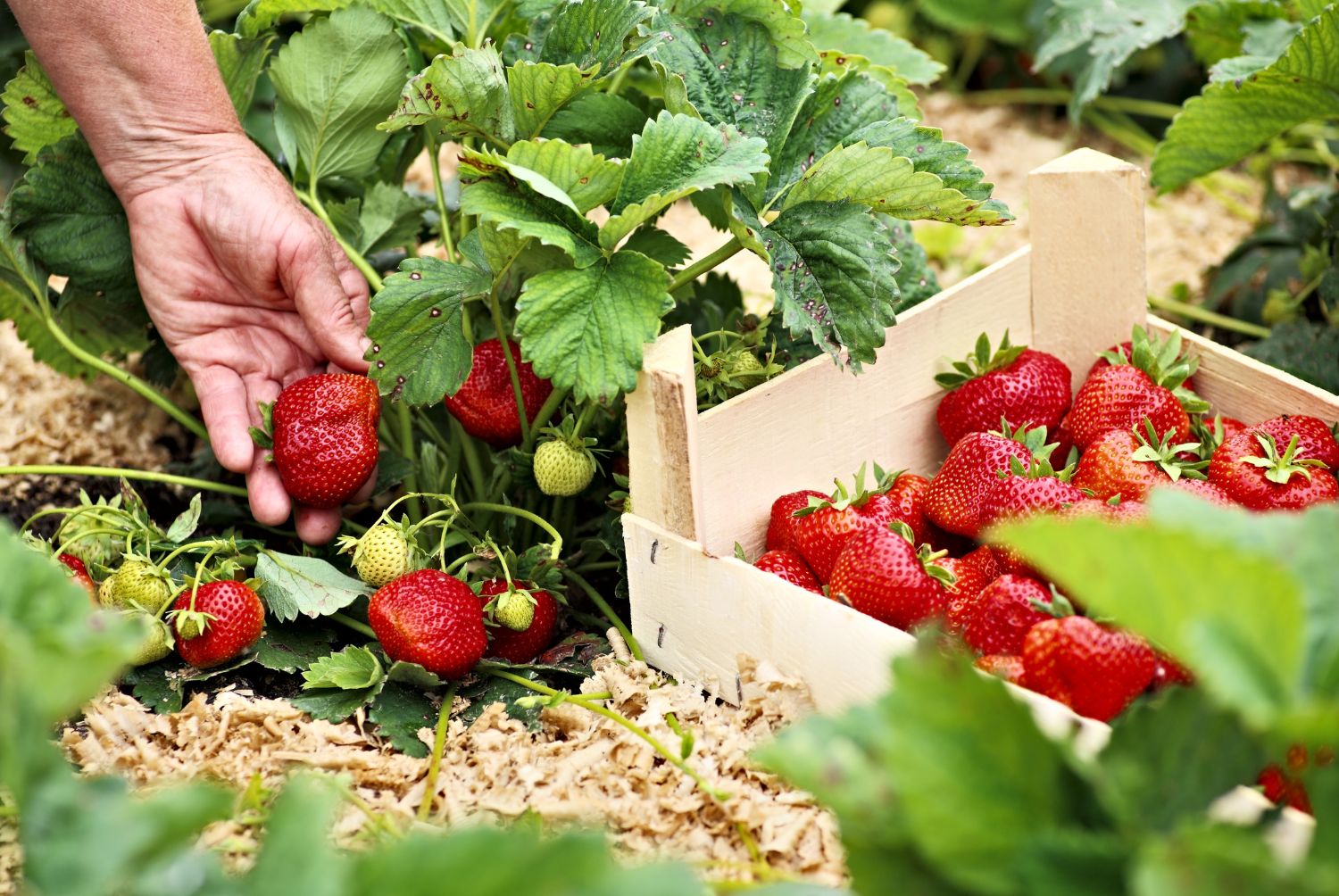
Loose, well-drained soil with a slightly acidic pH is preferable, ideally between 5.5 and 7.5. Sandy or loamy-sandy soils are our perfect allies – do you know why? Because they allow water and nutrients to flow freely, preventing the dreaded waterlogging that is so harmful to roots. And let’s not forget organic matter; it’s vital. Levels of 2–3 per cent are highly recommended. If we’re a bit short on that, no problem! We can enrich the soil with well-rotted manure or compost. In Huelva, for example, that sandy soil texture is key to creating dense, well-formed ridges, which greatly benefit the crop.
Climate requirements
It is a fairly adaptable crop, but to ensure it performs at its best, the ideal temperatures for fruit set are between 15°C and 20°C as an annual average. During the day, temperatures between 18°C and 22°C are perfect, and at night, between 10°C and 15°C. One factor that is sometimes underestimated, but which is crucial, is light. In Spain, we enjoy almost 3.000 hours of sunshine, a real boon for flowering and fruit development. To protect the crop from frost or temperature fluctuations, particularly during the critical pollination phase (which usually runs from November to January), plastic micro- and macro-tunnels become our best allies, although we must bear in mind that they reduce light radiation by between 10% and 35%.
Hydrological requirements
Water management for strawberry cultivation is, perhaps, one of the most significant challenges. It is a delicate fruit, highly sensitive to both a lack of water (water stress) and excess moisture, which can ruin the yield and pave the way for disease. And it is not just the quantity, but the quality of the water used for agricultural irrigation that matters. Furthermore, strawberries are also highly sensitive to salinity, so water with low electrical conductivity is what we are looking for.
The most widespread – and most successful – practice is high-frequency watering, that is, daily or very frequent watering. This ensures that the plant receives water and nutrients constantly and evenly.
How are strawberries grown?
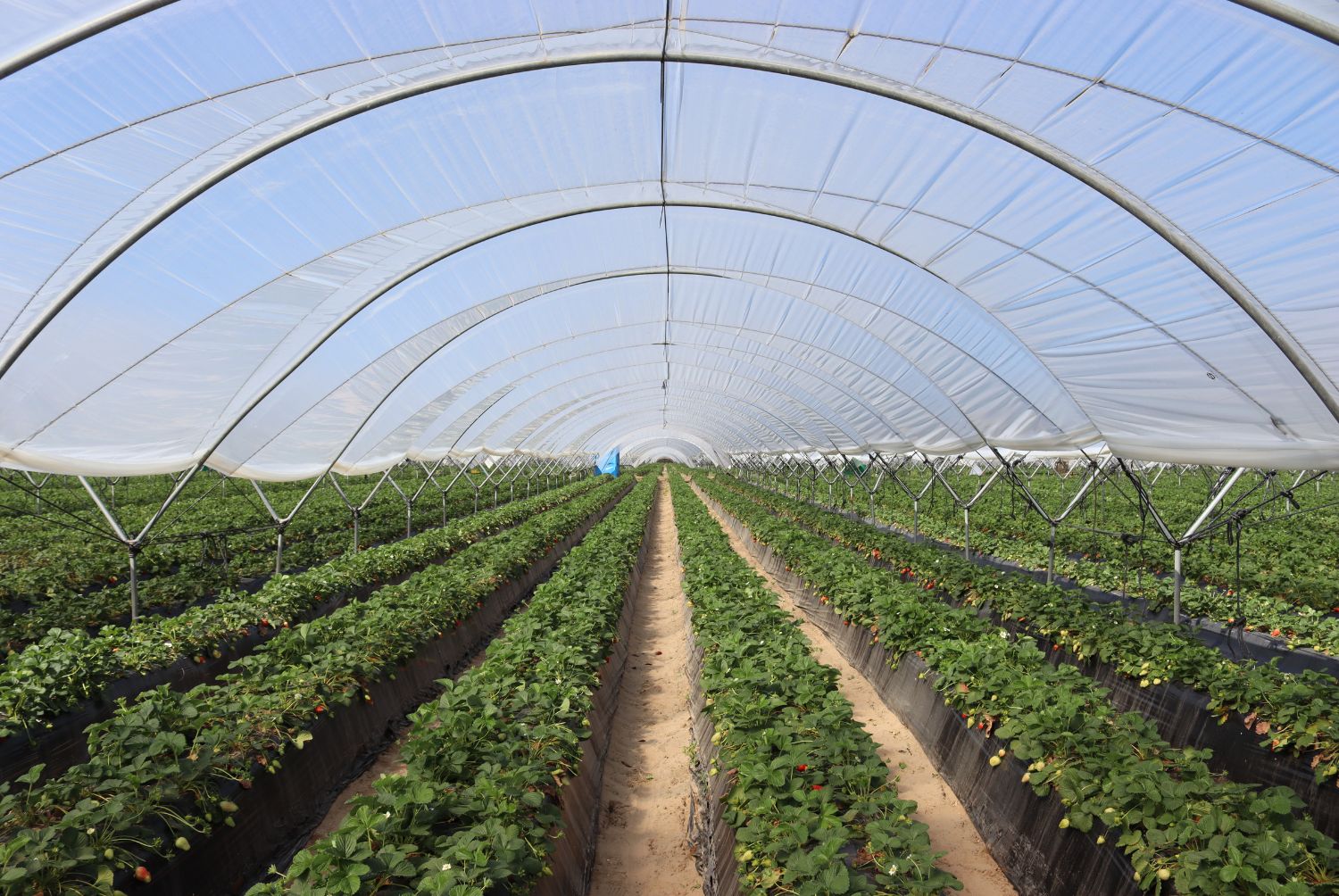
We have explained all the characteristics of this crop. But how do we put all this into practice on our farm? We explain this below.
How to sow
The layout of the plot is key. In Spain, experience tells us that it is best to plant in raised beds or mounds. Imagine a bed of soil about 70–80 cm wide and about 20 cm high. On this bed, we place two rows of plants, spaced about 40 cm apart, with each plant about 30 cm from the next. With this system, we achieve a density of between 50.000 and 60.000 plants per hectare. It is vital to ensure that the root collar sits level with the ground to avoid future problems.
One interesting feature, inherited from Californian technology and adapted here, is the use of the ‘planting spike’. It is a steel rod that makes a precise hole in the plastic mulch, allowing the plant to settle perfectly without leaving any room for weeds – a stroke of artisanal genius!
When to sow
In Spain, the main strawberry planting season takes place in autumn, specifically in October. We use fresh, bare-root plants supplied to us by high-altitude nurseries. The aim? To bring forward the harvest so that we can supply the European markets in winter and spring.
When to water
As I mentioned, irrigation in intensive agriculture is carried out very frequently. Water requirements are met through daily or very frequent irrigation, particularly during the hottest months. Our most advanced irrigation system is, without a doubt, localised irrigation, mainly using drip tape. This system allows us to control water and nutrients with millimetre precision, optimising water consumption and, most importantly, the quality of the fruit.
Watering times can range from 30 to 45 minutes a day during the planting phase, and then gradually increase to 60 to 80 minutes a day once the plants are fully established. And here’s a tip from an agronomist! Ideally, water first thing in the morning; never in the afternoon, and certainly not during the hottest part of the day, to prevent evaporation and moisture-related problems.
Strawberry processing and harvesting
Caring for the plant does not end with planting; it is an ongoing process that culminates in the sweet reward of the harvest.
Fertilisers and fertigation
Fertigation is the gold standard among crop nutrition techniques. It allows us to reduce the amount of base fertiliser and deliver nutrients directly to where the plant needs them, via drip irrigation. Strawberries are demanding in terms of organic matter and require a good balance of macro- and micronutrients: nitrogen (N), phosphorus (P₂O₅), potassium (K₂O), magnesium (Mg) and calcium (Ca). This method is not only efficient, but also minimises contact between the nutrients and the leaves, which is essential for plant health.
Types of pests and treatments
We are constantly faced with challenges posed by common pests such as spider mites (Tetranychus urticae), thrips (Frankliniella occidentalis) and aphids (Aphis spp.). As for diseases, grey mould (Botrytis cinerea), powdery mildew (Sphaerotheca macularis) and black root rot (BRR) are the most common.
But it’s not all about chemicals. Our sector has been a pioneer in the implementation of Integrated Production and biological control. This means that, as well as minimising the use of plant protection products, we employ natural ‘soldiers’ such as Amblyseius californicus and Phytoseiulus persimilis to combat mites, or Amblyseius cucumeris and Orius laevigatus for thrips. It’s fascinating to see how nature helps us! Soil disinfection, which used to be carried out using methyl bromide, has been replaced by chemical and biological alternatives such as biosolarisation.
Strawberry harvesting
The staggered harvesting of strawberries is, without a doubt, the most labour-intensive operation – accounting for over 80 per cent of the total labour required! It is delicate, manual work, in which each fruit is picked individually. Just imagine the care involved: the berries must be picked when they have reached full commercial ripeness, that is, when at least three-quarters of their surface is red. Why such care? Because it is a non-climacteric fruit; once picked, it will not ripen any further.
To preserve freshness, harvesting takes place mainly during the coolest hours of the day, and the fruit must be transported to the processing centre quickly – within no more than two hours – to prevent it from spoiling. During a growing season, it is common to carry out between 25 and 35 harvesting rounds between January and May. What an impressive pace!
Irrigation products for strawberries
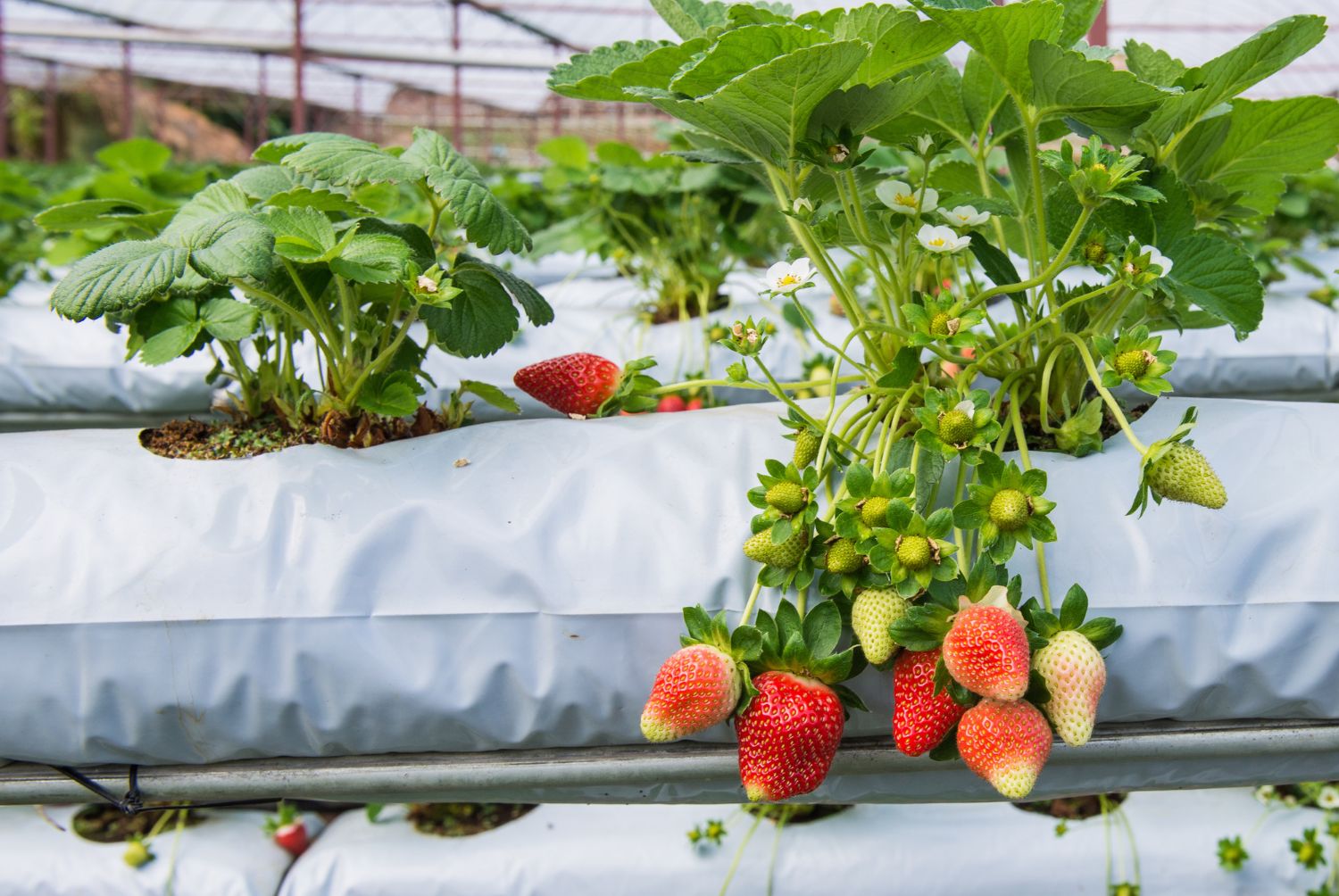
Optimising irrigation is not just good practice; it is the key to success in growing this fruit. At Caudal, we have a thorough understanding of this need and offer a wide range of productsthat guarantee water and nutrient efficiency.
Our approach focuses on drip irrigation, the most advanced and, if I may say so, the most intelligent system for the modern production of Fragaria × ananassa. With drip irrigation, we minimise water stress, we can apply fertigation precisely and, very importantly, we avoid wetting the leaves, which drastically reduces the incidence of fungal diseases.
Are you wondering how much to water a strawberry plant? Our systems allow you to manage the depth of moisture penetration and tailor irrigation to the specific needs of your crop and the weather conditions. In this way, we ensure the ideal moisture levels that plants crave.
Are you thinking of buying an irrigation system for strawberries? At Caudal, we have a wide range of products designed for your farm, from high-performance drip tapes such as SKY – perfect for double-row cultivation – to robust main pipes and filters such as SABfilter. We also stock all the necessary accessories, such as Rioflex tape connectors, to ensure your installation is comprehensive and efficient.
Our irrigation automation solutions give you even greater control, ensuring maximum yield and fruit quality. Caudal.es’s drip irrigation range is designed to help you implement efficient irrigation, achieving higher yields and superior quality in your harvests. Don’t hesitate any longer. Discover the prices of irrigation systems and irrigation solutions for strawberry crops that best suit your needs. Visit our catalogue of irrigation systems and start seeing the difference! Let us help you grow your crop now.
Frequently asked questions about growing strawberries
What is the best irrigation system for strawberries?
Without a doubt, my experience tells me that drip irrigation is the most recommended and efficient system for growing strawberries. It delivers water and nutrients directly to the root zone, minimising wastage and, crucially, preventing the leaves from getting wet, thereby reducing the incidence of leaf diseases
How much should you water a strawberry plant?
The water requirements of strawberries vary greatly depending on the stage of growth and the weather. With drip irrigation systems, the key is frequency. We recommend daily or very frequent watering, with volumes adjusted to maintain constant soil moisture without causing waterlogging. For example, at the start, this might be 30–45 minutes a day, increasing to 60–80 minutes a day during the peak growing season.
When are strawberries planted?
In areas such as Huelva, which have a distinctive climate, strawberries are mainly planted in the autumn, usually in October, using fresh bare-root plants. This enables us to bring forward production and supply the winter and spring markets with high-quality fruit.