


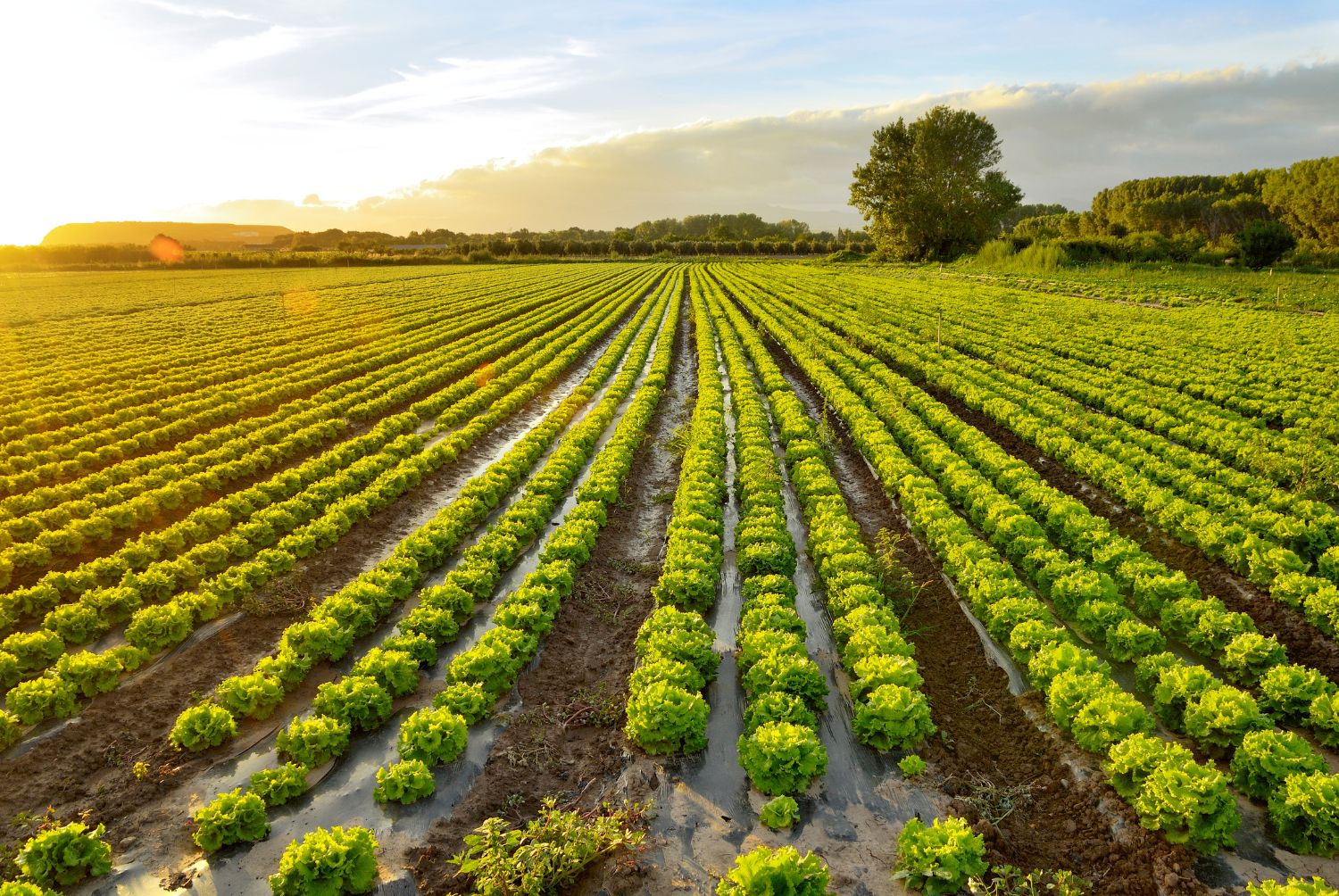
Lettuce is usually grown outdoors
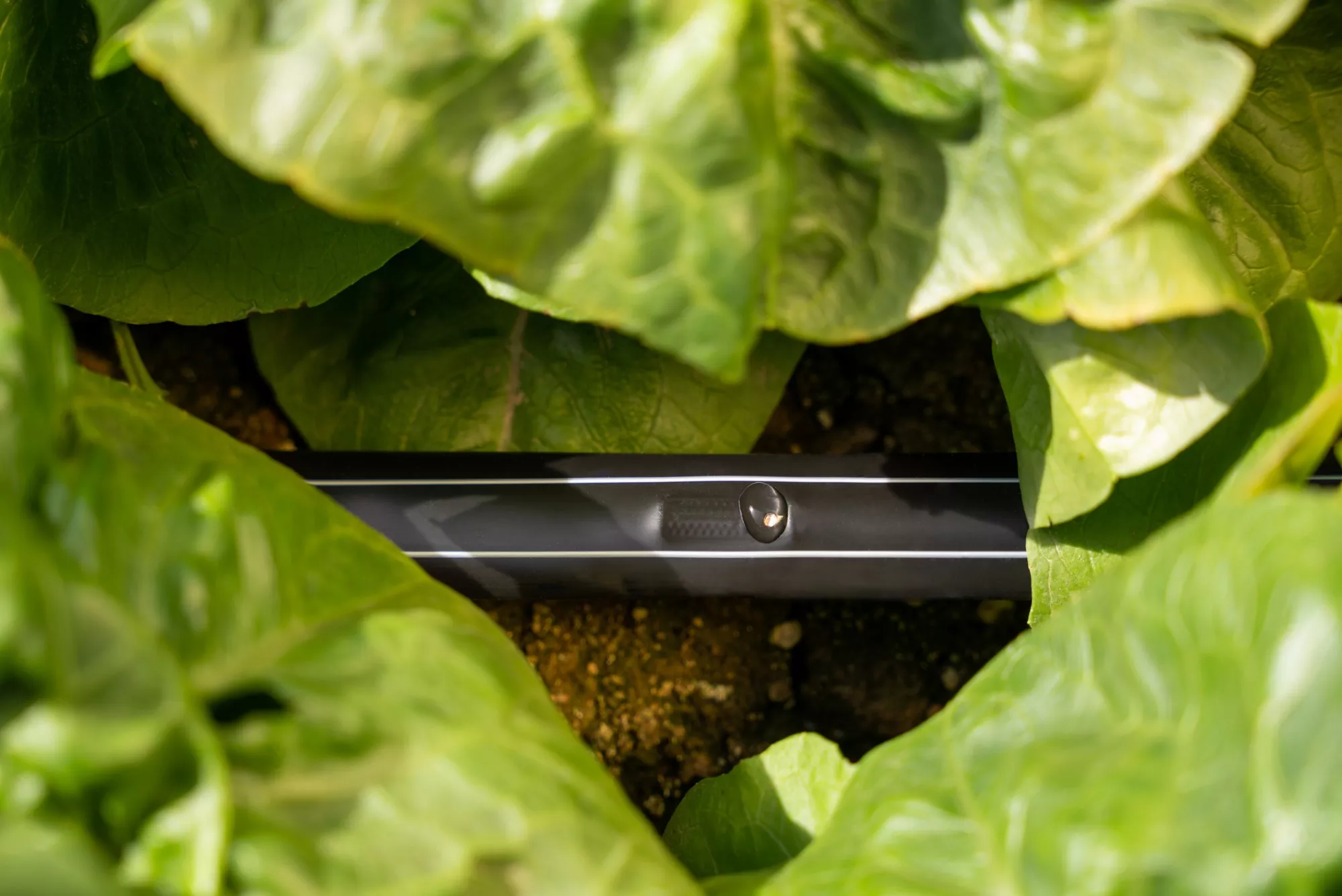
Drip irrigation is essential for growing these crops. It is not just a tool: it ensures that water goes exactly where the plant needs it. No wastage, and no diseases caused by excessive moisture on the leaves. At Caudal, we have been helping growers fine-tune their crops down to the millimetre for years. Because watering properly isn’t just about giving water: it’s about doing so sensibly.
Types of lettuce
When you think of lettuce, you usually picture romaine or iceberg. But the world of this vegetable is much broader than that. There are many varieties, and not all of them behave in the same way in the field. Some grow quickly, others tolerate the heat better, and others are grown almost exclusively under cover.
- Lettuce: very common in open fields, with elongated leaves and good tolerance to hot weather. Ideal for intensive growing cycles.
- Iceberg: rounder, more compact and with a crisp texture. It thrives in temperate climates and requires a little more water.
- Batavia: curly leaves, mild flavour. Widely used in local markets. Withstands low temperatures quite well.
- Oak leaf lettuce: both green and purple. Highly prized in gourmet salads. Requires rich soil and a little more care.
- Lollo rosso: a lettuce with intense colouring; it is somewhat more demanding to grow, but has great commercial value in specialised cultivation.
The choice of variety depends on three factors: the climate, the soil type and the market you’re targeting. Planting in Murcia is not the same as planting in Burgos, nor is selling to the food industry the same as selling to local restaurants and hotels.

Requirements for Growing Lettuce
Soil requirements:
Lettuce has shallow roots, so the ideal soil is light in texture but able to retain moisture. Loamy soils, containing some organic matter, work very well. If the soil is too clayey, it is advisable to mix in compost or perlite to aerate it. The optimum pH is between 6 and 7.
Climate Requirements
It does not like either extreme heat or frost. The ideal temperature range is 15 °C to 22 °C. Above 25 °C, the plant begins to suffer from stress, and if the temperature drops below 10 °C for several days, growth slows down. In areas with an unstable climate, a greenhouse may be the best option.
Water requirements
Lettuce requires constant moisture in the soil, but cannot tolerate waterlogging. Excess water causes root asphyxia and encourages fungal growth. For this reason, drip irrigation has become almost the norm. It allows the soil to be kept at the right moisture level without becoming waterlogged.
👉 If you don’t have a system installed yet, at Caudal we have ready-to-assemble drip irrigation kits, with adjustable drippers and quick-connect fittings.
How is lettuce grown?
How to sow
There are two ways to do this: direct sowing or transplanting. Direct sowing is used less often, as it requires greater control. Transplanting from a seedbed allows for better selection of seedlings and adjustment of planting densities. The seeds need a temperature of between 10 and 20 °C to germinate properly, and they usually take between 5 and 10 days to emerge.
When to sow
It depends on the area. In temperate regions, it can be grown almost all year round, whilst in colder areas, winter is usually avoided. In a greenhouse, it can be grown continuously, rotating varieties according to the season.
When to water
From the moment of sowing, watering should be light but consistent. As the plant grows, you can water less frequently, but without allowing the soil to dry out. The best time to water is first thing in the morning or late in the afternoon, to minimise water loss through evaporation.
Lettuce treatment and harvesting
Fertilisers and fertigation
Lettuce responds very well to fertigation, particularly when combined with a drip irrigation system. A balanced fertiliser containing nitrogen, phosphorus and potassium (NPK) is recommended, with doses adjusted according to the crop’s growth stage. Nitrogen must be applied with care to prevent the build-up of nitrates in the leaves.
At Caudal, you can find specialist products for fertigation, compatible with drippers and dosing valves.
Pests and treatments
Among the most common are aphids, thrips, leaf miners and slugs. There are also diseases such as mildew and botrytis, particularly when there is high humidity. Prevention is best: ensure good ventilation, manage watering carefully and, where possible, use organic treatments.
Collection
It takes between 30 and 70 days from sowing to harvest, depending on the variety and conditions. The crop is harvested by hand, cutting at the base. It is important to do this during the cooler hours of the day to prevent water loss and maintain quality.
Irrigation products for lettuce
If you’re thinking about automating or upgrading your irrigation system, do consider these solutions available from Caudal:
- Drip irrigation systems for crops grown in rows or on terraces.
- Adjustable drippers, ideal for regulating the flow rate as the plant grows.
- Irrigation timers – so you don’t have to keep an eye on the clock.
Discover our lettuce products or ask for personalised advice. Save water, improve yields and simplify your day-to-day work in the fields.
Frequently Asked Questions about Growing Lettuce
When can you plant lettuce outdoors?
In temperate regions, almost all year round. Avoid extreme heat and cold.
Which irrigation system is best for lettuce?
Drip irrigation: precise, efficient and helps prevent damp-related diseases.
How many times a week is the lettuce watered?
It depends on the weather and the soil, but it’s usually every 1–2 days in summer and every 3–4 days in winter.
Which fertiliser is best for lettuce?
A balanced NPK formulation tailored to the growth cycle.
How long does it take for lettuce to grow?
Between 30 and 70 days, depending on the variety, time of year and conditions.