



What is blueberry cultivation?
Blueberry cultivation has evolved from being a niche speciality to becoming a profitable option within the fruit-growing sector. What was once limited to certain temperate regions can now be grown in a wider range of areas thanks to irrigation technology and new, more hardy varieties.
From an agronomic point of view, the blueberry (Vaccinium spp.) demands precision. It is not a hardy plant; it requires acidic soil, good drainage, a specific number of chill hours and a consistent, well-planned irrigation strategy. However, when given what it needs, it responds with remarkable productivity and high-quality fruit, which is in high demand both on the domestic market and in the online sale of fresh blueberries.
Types of blueberries
In terms of production, the most commonly used are:
- Highbush (Vaccinium corymbosum): ideal for cultivation in temperate zones. It requires colder conditions, but produces high yields.
- Rabbiteye (V. ashei): more tolerant of hot climates, although sensitive to soil pH.
- Lowbush (V. angustifolium): it thrives in cold environments and has a more intense flavour, but its yield is lower.
Choosing the right variety for the agroclimatic zone is the first step towards ensuring the project’s viability.
Requirements for growing blueberries

Soil requirements
Blueberries are very particular in this respect. They require acidic soil (pH between 4.5 and 5.5) that is well-aerated and has good water-holding capacity, but without waterlogging. Sandy loam or silty loam soils usually work well, provided the soil structure is improved and the organic matter content is increased.
Technical note: if the soil’s pH is above 6.0, you will need to acidify it. Elemental sulphur or acidified peat can help, but it is advisable to make the adjustment gradually before sowing.
Climate requirements
The ideal climate for growing blueberries is temperate, with cold winters (to accumulate chill hours in the case of highbush blueberries) and mild summers. Temperatures above 30 °C during fruit set or ripening can affect the quality of the fruit.
In extreme climates, growing blueberries in greenhouses or under shade netting yields promising results, as it allows both temperature and humidity to be controlled.
Hydrological requirements
There is no room for error here: watering blueberries must be consistent, precise and efficient. The roots are shallow and highly sensitive to both excess moisture and water stress.
It is therefore recommended that a drip irrigation system be installed for blueberries, preferably one that allows for soil moisture monitoring – using tensiometric or capacitive sensors – and flow rate control.
How are blueberries grown?
How to sow
Blueberries are usually planted using rooted cuttings, not from seed. It is recommended that the soil be prepared at least six months in advance. The plants should be placed in rows spaced 2.5 to 3 metres apart, with a distance of 0.8 to 1.2 metres between plants.
On unsuitable soils, a system of raised beds with controlled growing media (mixtures of peat, perlite and acidic compost) can be used; this is a common technique in professional horticulture.
When to sow
In temperate zones, the best time is late winter or early spring, provided there is no risk of frost. In a greenhouse, there is more flexibility.
When to water
Right from the start. Irrigation for blueberry cultivation should begin even before planting, to ensure the growing medium is properly moistened. It is then essential to maintain moisture levels between 60 per cent and 80 per cent of field capacity. Pressure irrigation or self-compensating drip irrigation is ideal for maintaining uniformity.
Blueberry processing and harvesting
Fertilisers and fertigation
Fertilisation of blueberries must be tailored to the soil type, phenological stage and leaf analysis. The nutrients most in demand are nitrogen, potassium, calcium and iron. Blueberries are very sensitive to salinity, so avoid over-fertilising with conventional fertilisers.
Fertigation, particularly via drip irrigation, allows fertilisers to be applied in a controlled manner, preventing build-up. Acidified formulations or those containing chelated iron are useful for preventing iron chlorosis.
Types of pests and treatments
Some common pests affecting blueberries:
- Drosophila suzukii: bores into ripe fruit. It is essential to set up monitoring traps and implement integrated pest management.
- Thrips: they attack young shoots and flowers.
- Spider mites: in dry, warm environments.
Also, don’t forget to keep an eye out for diseases such as botrytis, particularly during flowering and in the run-up to harvest.
Blueberry harvesting
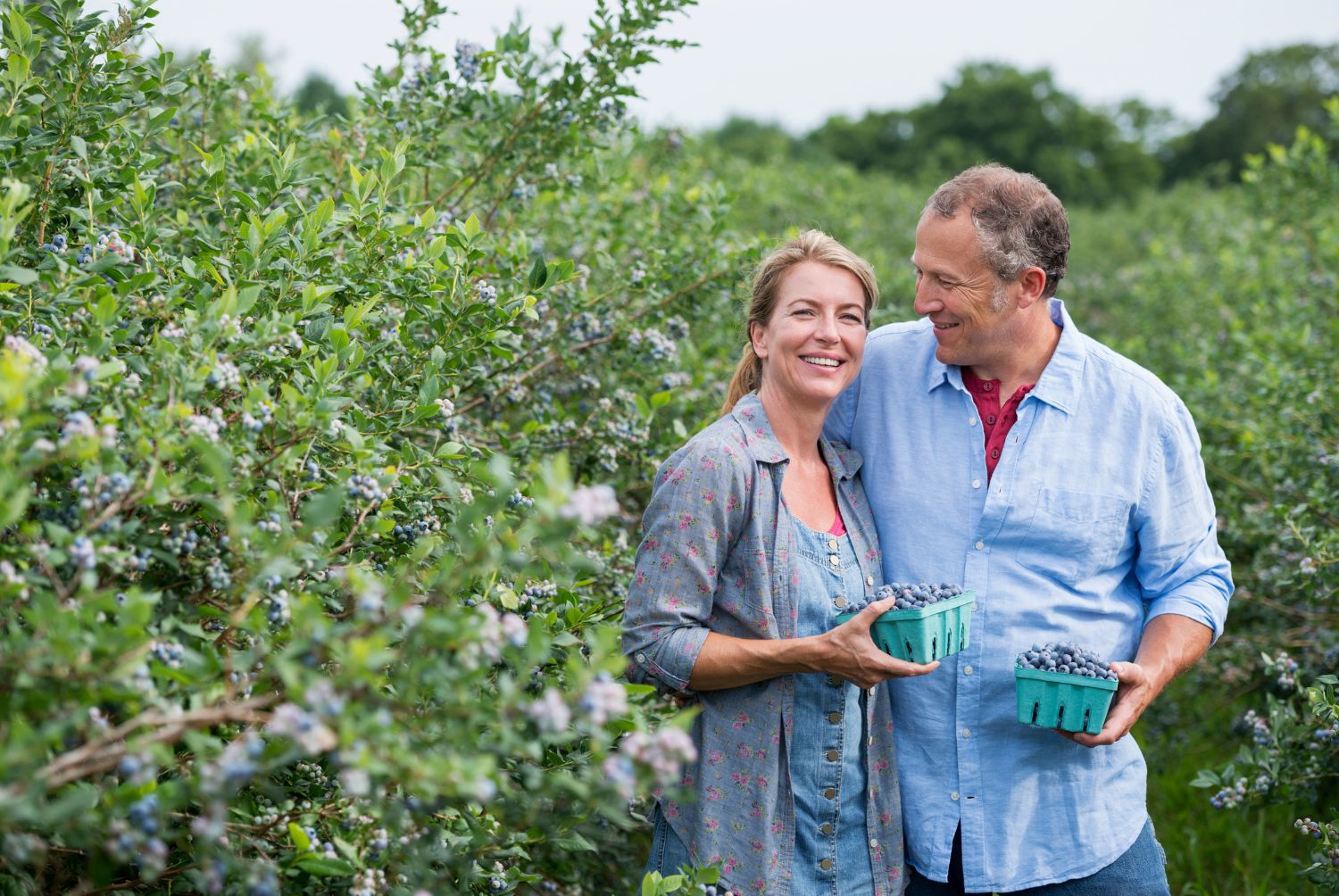
Blueberries are harvested in several stages, as the fruit does not all ripen at the same time. The fruit must come away easily and be a uniform blue colour. For fresh sale, hand-picking is essential if quality is to be maintained.
Average yields range from 8 to 15 t/ha in well-managed crops.
Irrigation products for blueberries
At Caudal, we know that a good irrigation system not only saves water but also makes a real difference to crop profitability. That is why we offer technical solutions designed to meet the specific requirements of blueberries:
- Drip irrigation systems with self-compensating and anti-siphon drippers.
- Pressure irrigation for blueberries, ensuring uniform distribution on uneven terrain.
- Fertigation systems compatible with acidic solutions and micronutrients.
- Soil moisture monitoring kits and automatic controllers.
We also offer irrigation solutions for new farms or farm expansions. Please ask us and we’ll advise you based on your agroclimatic conditions and land area.
Productivity, flavour and sustainability
Blueberry cultivation offers a real opportunity to stand out in the fruit and vegetable market. Indeed, when attention is paid to the technical details — from the soil for blueberries to efficient irrigation — the results follow.
At Caudal, we help make that happen. With agronomic advice, optimised irrigation systems and bespoke solutions for your farm, we work with you to take your project to the next level.
Are you interested in producing more and better crops? Get in touch and find out why our customers have already chosen us for their blueberry crops.
Frequently asked questions about growing blueberries
What is the best irrigation system for growing blueberries?
The most recommended method is drip irrigation, which allows for fertigation. It enables water and nutrients to be applied directly to the root zone, precisely and without wastage.
What types of fertilisers are used in blueberry cultivation?
Fertilisers with low salinity, which acidify the soil and provide readily available nitrogen (preferably in the form of ammonium). Ammonium sulphate, calcium nitrate and iron chelates are commonly used.
When does the blueberry harvest take place?
It depends on the variety and the region, but it generally takes place between May and August. Staggered harvests make it possible to schedule the picking without overburdening the workforce.